
The Super Falcons’ World Cup Setback: Time for Honest Questions, Not Easy Answers
Nigeria’s World Cup setback exposes questions that go far beyond Justin Madugu, from preparation and investment to player development and the rapidly rising standard of African women’s football.
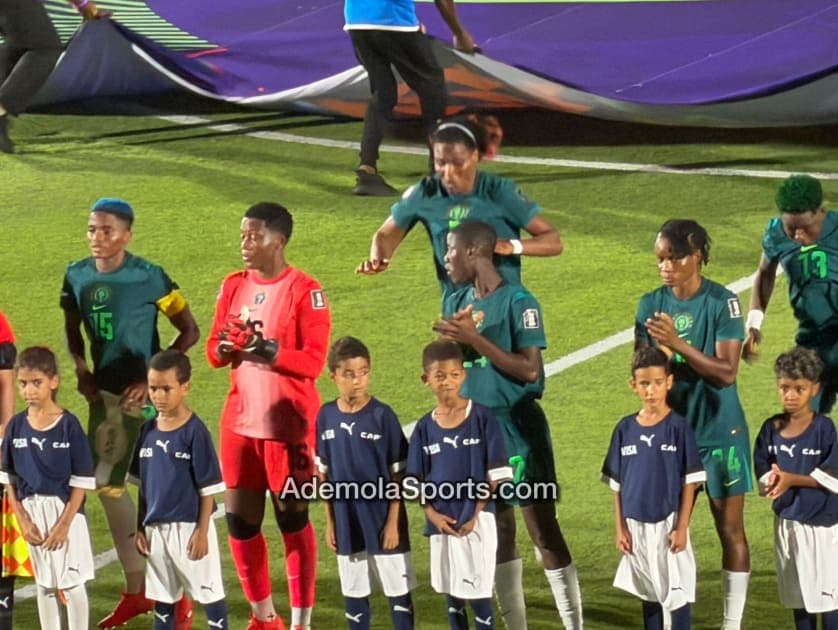
Nigeria’s historic failure to qualify for the 2027 FIFA Women’s World Cup demands a serious critique. But the conversation should go beyond one coach, one match or one hashtag.
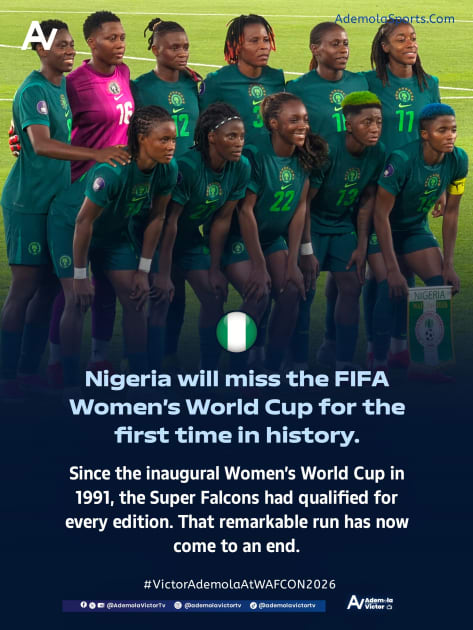
The anger is understandable.
Nigeria has just suffered a historic setback. The Super Falcons will miss the FIFA Women’s World Cup for the first time since the tournament began in 1991, after a 2–1 defeat to South Africa in Casablanca ended their route to Brazil 2027.
It hurts.
It should hurt.
For a country that had never previously missed the women's football showpiece, this is a moment that demands answers.
Justin Madugu, as head coach, must be part of those questions.
So must the players.
So must the preparation.
So must the Nigeria Football Federation.
And so must the wider system supporting Nigerian women's football.
But there is a danger in looking for one easy answer to a complicated problem.
This is not about defending Madugu. It is about making sure the search for answers is bigger than Madugu.
Madugu deserves a fair critique
Madugu is the head coach. That comes with responsibility.
His tactics should be examined.
His selections should be examined.
His substitutions should be examined.
The team's performances should be analysed.
Its preparation should be questioned.
That is not hostility. It is part of elite sport.
A national-team coach cannot reasonably expect to avoid scrutiny after a result of this magnitude.
But there is another part of the story that should not disappear simply because the latest result is painful.
The same Madugu now facing intense public anger also led Nigeria to the 2024 WAFCON title last year.
Nigeria came from two goals down to defeat hosts Morocco 3–2 in the final and win a record-extending 10th African title. Madugu had taken charge few months before the tournament. His team ultimately went through the competition unbeaten and produced one of the most memorable comebacks in Nigerian women's football.
That achievement does not make him immune from critique today.
It does not mean every decision he has made since then was right.
It does not mean Nigeria should automatically retain him.
But it does demand intellectual honesty and consistency.
When Nigeria won, the players received much of the praise.
When Nigeria lost, the coach became the overwhelming focus of the anger.
The reality is more complicated.
The players deserve credit for winning the WAFCON.
The coach deserves credit for the role he played in that success.
And when things go wrong, both the players and the coaching staff must accept their share of responsibility.
Success is collective. Failure should be examined collectively too.
This is bigger than #MaduguOut
There is nothing wrong with believing Madugu should no longer coach the Super Falcons.
That is a legitimate football opinion.
A proper technical review could reach that conclusion.
But there is a difference between saying:
“Madugu is not the right coach for the next chapter.”
and saying:
“Madugu is the reason Nigerian women's football is struggling.”
Those are not the same argument.
The first is about coaching.
The second is about an entire football system.
If Madugu leaves tomorrow, Nigeria will still have to answer the same questions.
How much preparation will the next coach receive?
How many quality international matches will the team play?
What technical and sports-science support will be available?
How strong is the domestic player-development pathway?
How effective is the scouting system?
What is the long-term technical philosophy?
Who is developing the next generation of Super Falcons?
Changing the coach may be necessary.
But changing the coach is not the same thing as changing the system.
Africa is changing
This is perhaps the most important context missing from much of the current conversation.
African women's football is getting better.
Nigeria is no longer competing against the same continental landscape it dominated for decades.
At the 2024 WAFCON, held in Morocco in 2025, Nigeria, South Africa, Ghana and Morocco were the four semi-finalists. Nigeria beat South Africa 2–1 in the semi-final, while Morocco defeated Ghana before Nigeria went on to beat Morocco 3–2 in the final.
At WAFCON 2026, however, none of Nigeria, South Africa or Ghana reached the semi-finals.
Instead, Morocco, Cameroon, Algeria and Malawi made the final four, with Algeria and Malawi securing historic World Cup qualification.
That is significant.
It does not excuse Nigeria's failure.
It puts it into context.
The competitive gap is narrowing.
Countries are investing more in women's football.
Players are becoming more professional.
Domestic structures are improving.
Coaching is improving.
More teams are gaining international experience.
And nations that once entered major competitions simply hoping to compete are increasingly entering believing they can win.
Women's football in Africa is growing. Nigeria has to grow with it.
The old hierarchy cannot be taken for granted
Nigeria remains the most successful nation in WAFCON history.
That history matters.
But history cannot win today's matches.
The Super Falcons have won 10 African titles.
They had appeared at every Women's World Cup until now.
They have produced generations of exceptional players.
But none of that guarantees qualification for the next tournament.
Look at what has happened. Nigeria, South Africa and Ghana were among Africa's four best teams at the previous WAFCON. Zambia qualified for the 2023 Women's World cup, but could not even make it past the group stage at the 2026 WAFCON.
At the next tournament, these teams failed to reach the semi-finals.
Algeria and Malawi, meanwhile, reached the last four and secured their places at the 2027 World Cup.
That is not a reason to lower expectations of Nigeria. It is a reason to raise the level of Nigerian preparation.
The question should not simply be:
“How did they catch up with us?”
It should be:
“What are they doing that we need to learn from?”
Critique the football. Do not abuse the people.
This is where the public conversation also needs balance.
Supporters have every right to be angry.
They have every right to question the coach.
They have every right to question the players.
They have every right to demand answers from the NFF.
But disappointment should not become a licence for personal abuse.
A player can have a poor game without being useless.
A coach can make a poor tactical decision without being worthless.
A goalkeeper can make an error without deserving personal attacks.
And a historic defeat does not erase everything these players have contributed to Nigerian football.
Critique the football. Question the decisions. Demand accountability. But do not lose sight of the people involved.
High standards and basic respect are not opposites.
When “I told you so” becomes the objective
There is another uncomfortable feature of football discourse, particularly after a major defeat.
Sometimes, the satisfaction of being proven right becomes almost as important as the defeat itself.
"I told you so."
"I warned you."
"I knew this would happen."
For a moment, some critics can feel like small gods of football discourse, because the result has validated their prediction.
But being right about a result does not automatically make every argument right.
And predicting failure is not the same as understanding why it happened.
The useful question is not:
Who predicted this?
It is:
Why did it happen, and what should change?
That is where serious critique begins.
The coach is visible. The system is not.
Madugu is easy to focus on because his decisions are visible.
We see the line-up.
We see the formation.
We see the substitutions.
We hear the press conferences.
But the environment around a national team is much larger than the person standing on the touchline.
Preparation matters.
International friendlies matter.
Player development matters.
Scouting matters.
Medical support matters.
Sports science matters.
Performance analysis matters.
The domestic league matters.
The transition from youth football to the senior team matters.
And the NFF's long-term planning matters.
These are not excuses.
They are factors.
A serious critique must consider all of them.
The NFF must also answer questions
The Super Eagles also failed to qualify for the World Cup. If Madugu is going to be examined, the NFF should be examined too.
What preparation did the team receive?
Was the opposition in friendly matches strong enough?
Was the team given sufficient time together?
Was the technical team adequately supported?
Was there a clear long-term plan?
Was preparation designed around sustained development or simply the next tournament?
These are legitimate questions.
The objective should not be to find a convenient person to carry the entire burden of disappointment.
It should be to identify what needs to improve.
If the coach is part of the problem, address it.
If preparation is part of the problem, address it.
If administration is part of the problem, address it.
If player development is part of the problem, address it.
Several things can be wrong at the same time.
The Super Falcons deserve serious investment
There is another conversation Nigeria must have.
The Super Falcons deserve serious, sustained investment.
There is a legitimate argument that they deserve equal, and in some areas even greater, investment than the Super Eagles.
That is not an argument against the men's national team.
It is not about taking anything away from the Super Eagles.
It is about recognising what the Super Falcons have achieved.
They are Africa's most successful women's national team.
They have won 10 WAFCON titles.
They had appeared at every Women's World Cup until now.
They have produced players competing at the highest levels of the global game.
They have repeatedly carried Nigeria's name onto the biggest stages.
If Nigeria expects them to compete with countries that are rapidly improving their women's football structures, the investment must reflect that ambition.
Better preparation.
Better facilities.
Better international friendlies.
Better technical support.
Better medical care.
Better sports science.
Better player welfare.
Better domestic competitions.
Better youth development.
Better scouting.
This is not charity. It is investment in performance.
Equal seriousness does not mean identical spending
There is an important distinction.
Calling for equal treatment does not mean every naira spent on the Super Falcons must exactly match every naira spent on the Super Eagles.
The competitions, commercial structures and operational demands are different.
But women's football should not be treated as less important.
If Nigeria expects world-class performance, the environment must support world-class performance.
We cannot demand equality on the scoreboard while accepting inequality in preparation.
The domestic game is part of the answer
The Super Falcons cannot carry Nigerian women's football alone.
The foundation beneath them has to be stronger.
The domestic league needs investment.
Youth development needs attention.
Coaches need development.
Facilities need improvement.
Scouting needs to become stronger.
The pathway from youth football to the senior national team needs to be clearer.
A strong national team is usually a reflection of a strong football ecosystem.
So perhaps one of the most important questions Nigeria should be asking is not simply:
Who should coach the Super Falcons?
It is:
What system are we building to produce the next Super Falcons?
What should happen now?
Nigeria should resist the temptation to make an emotional decision simply because the result is painful.
The NFF should conduct a serious technical review.
Not a public-relations exercise.
Not a social-media trial.
A genuine assessment.
Madugu should be evaluated.
The players should be evaluated.
The preparation should be evaluated.
The technical structure should be evaluated.
The NFF's role should be evaluated.
The domestic pathway should be evaluated.
And the findings should determine what happens next.
If Madugu is judged to be the right coach, he should be properly supported.
If he is judged not to be the right coach, Nigeria should appoint someone better.
But whatever decision is made, the wider problems cannot be ignored.
This should be a turning point
Nigeria's World Cup failure is painful.
But perhaps the worst response would be to learn the wrong lesson from it.
The wrong lesson is:
“We lost because of one person.”
The better question is:
“Why did we lose, and what needs to change?”
Maybe Madugu is part of the answer.
Maybe the players are part of the answer.
Maybe preparation is part of the answer.
Maybe the NFF is part of the answer.
Maybe it is all of them to different degrees.
That is why this moment requires more than anger.
It requires honesty.
Do not attack the players unfairly.
Do not attack the coach unfairly.
Do not shield anyone from legitimate critique either.
Hold people accountable.
But do it intelligently.
The Super Falcons deserve high expectations because of their history.
They also deserve the investment required to meet those expectations.
They deserve serious preparation.
They deserve professional support.
They deserve better structures.
They deserve equal seriousness in national sports policy.
And Nigerian women's football deserves a long-term plan that does not begin only when a major tournament is approaching.
Because the rest of Africa is moving.
The competition is getting tougher.
Women's football is growing.
Nigeria cannot afford to stand still.
Everyone should be willing to look in the mirror.
The coach.
The players.
The federation.
The football system.
And, perhaps, even those of us watching from the outside.
Because the goal should not be to find someone to blame after every defeat.
The goal should be to build a Super Falcons programme capable of making this kind of disappointment much less likely in the future.
Enjoyed this story?
Reporting like this is funded by readers. A one-off gift keeps it coming.
Keep reading
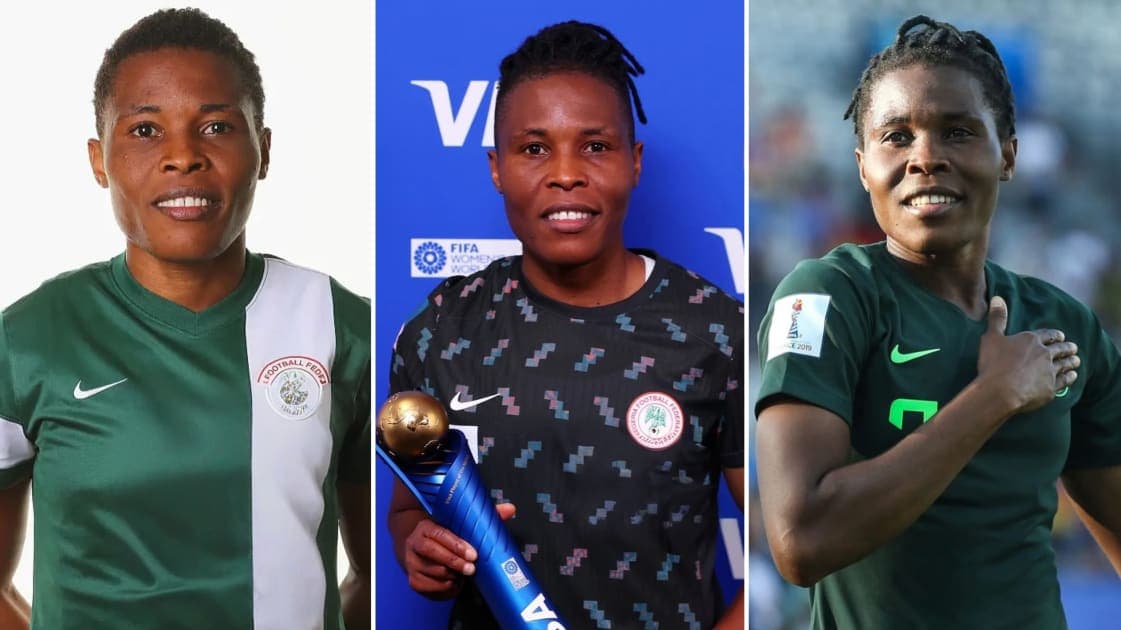
Osinachi Ohale Retires from International Football After 16 Years of Service to Nigeria
Super Falcons defender Osinachi Ohale has announced her retirement from international football after 16 years, 86 caps, four FIFA Women’s World Cups and five WAFCON titles.

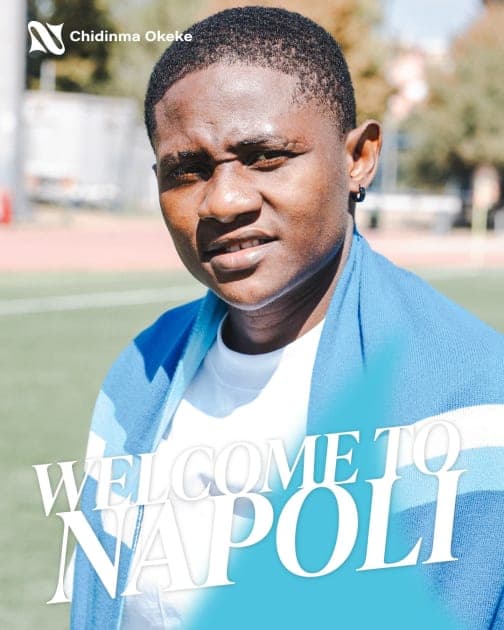
Super Falcons Defender Chidinma Okeke Joins Napoli Femminile
Super Falcons defender Chidinma Okeke has joined Italian Serie A club Napoli Femminile on a permanent transfer from Mexican side Club América. The 26-year-old Nigerian international brings extensive global experience to Naples after winning the Liga MX Femenil title and CONCACAF W Champions Cup with Club América.

Deborah Abiodun Opens Up Ahead of First-Ever Surgery: “Football Is My Life”
Nigeria international Deborah Abiodun has opened up ahead of her first-ever surgery, revealing her fears about missing football, international matches and club action after a hip injury ended her 2026 NWSL season.