
Super Falcons Lose to Cameroon: What Went Wrong and Can Nigeria Still Qualify for the World Cup?
Nigeria dominated Cameroon but failed to convert their chances. Beyond the defeat, the bigger questions are preparation, investment, coaching, and whether the Super Falcons can still fight their way to the 2027 FIFA Women’s World Cup.
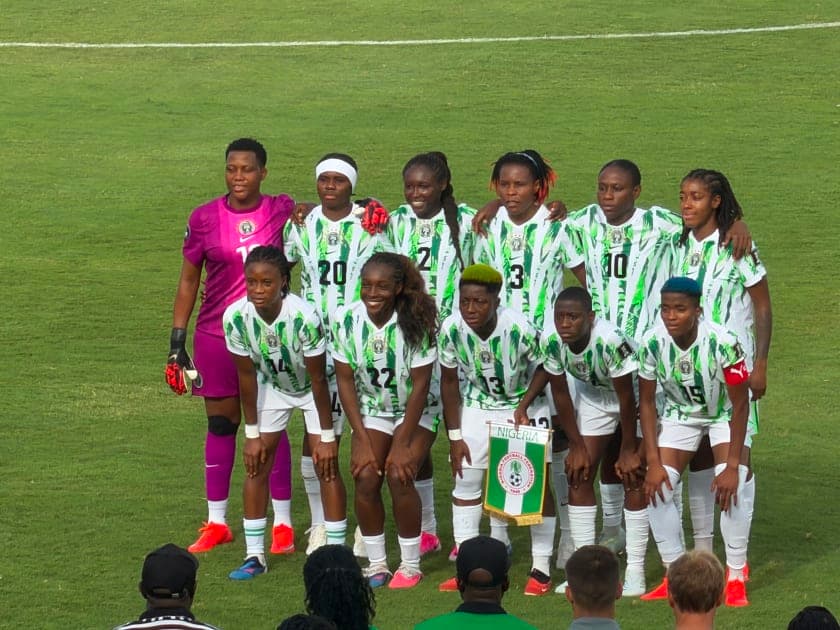
The Super Falcons’ defeat to Cameroon is disappointing, but I believe there is a bigger conversation to be had beyond the final score.
After taking some time to reflect on the game, I have tried to look beyond the immediate disappointment and ask a more important question:
What actually went wrong for Nigeria?
This is my personal assessment and critique. It is not about finding one person to blame, because football is rarely that simple.
Nigeria dominated, but Cameroon were more clinical
Cameroon deserve credit. They were determined, disciplined and took their opportunity when it came.
Nigeria, however, dominated the game statistically, with 60% possession and 9 shots on target, but could not find the back of the net.
Cameroon’s early free-kick goal ultimately decided the match.
I also have to give credit to the Cameroonian goalkeeper. She was outstanding. She made important saves and played a major role in keeping Nigeria from getting back into the game.
But at the same time, Nigeria should have found a way to score.
When you create the opportunities Nigeria created, you have to take at least one of them.
From Nigeria’s perspective, there was certainly an element of bad fortune in failing to convert, but Cameroon also deserve credit for their defending, their goalkeeper’s performance and their determination to protect the lead.
Nigeria dominated. Cameroon were more clinical. In knockout football, that can be the difference.
Preparation remains a major concern
This is perhaps the biggest issue for me.
Since Nigeria won the last WAFCON, I have personally called for the Super Falcons to have more quality international friendlies and better preparation.
This is not an argument I have suddenly developed because Nigeria lost to Cameroon. Anyone who has followed my work can go through my previous posts and see that I have consistently made this point.
Nigeria simply did not play enough quality games ahead of this tournament.
Preparation is not just about bringing players into camp.
It is about giving the coaching staff enough time to build team cohesion, establish a clear tactical identity, test different combinations, understand the players and prepare for different opponents and situations.
When preparation is inadequate, some of the work that should have been completed before the tournament inevitably happens during the tournament itself.
And in my opinion, that is where the federation must take responsibility.
There are several factors we cannot see from the outside
We should also be careful about pretending that we know everything that happened internally.
Different factors can contribute to a team not performing at its best.
Was the team completely cohesive?
Were the coach’s instructions executed exactly as planned?
Were the tactics implemented properly?
Did individual decisions affect the outcome?
Did Cameroon simply defend better?
Did Nigeria fail to take its chances?
Was there an element of bad luck?
We don’t have all the answers.
That is why reducing the entire defeat to “the coach is the problem” or “the players are the problem” is too simplistic.
Football is much more complicated than that.
African women’s football is changing
This is another reality Nigeria must confront.
We cannot continue to rely on our history and assume the rest of Africa will stand still.
Women’s football on the continent is developing rapidly.
Morocco, Malawi and other nations are improving their structures, investing more and becoming increasingly competitive.
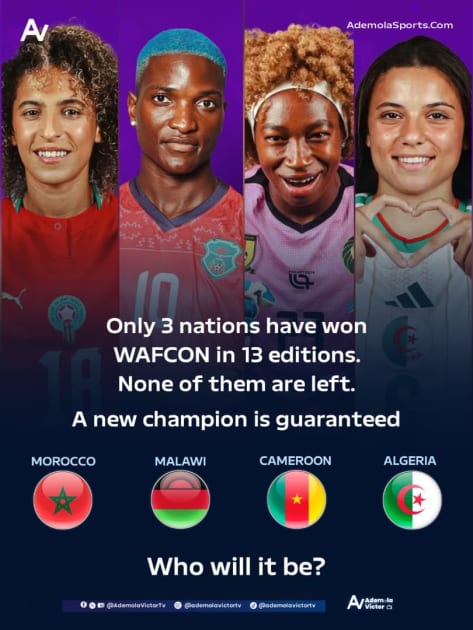
If Nigeria refuses to invest significantly, others will continue to close the gap.
Our history gives us an advantage. It does not give us a permanent entitlement to win.
The Super Falcons have built an incredible legacy, but that legacy must be protected through continuous investment and development.
The debate about Justine Madugu needs perspective
We currently have an indigenous coach in Justine Madugu, who took over only months before the previous WAFCON and went on to win the tournament.
That achievement cannot simply be erased because of one defeat.
Does that mean he should be above criticism?
Absolutely not. However he should be critiqued (talk about the positives and negatives) not just insulted without looking at the bigger picture.
Coaches must be analysed and held accountable for their decisions, tactics and results.
There has been some conversation about hiring a foreign coach, but we can’t just pick someone because they are foreign. I would only support replacing an indigenous coach with a foreign coach if the NFF is prepared to make a serious investment in bringing in someone who is genuinely among the best available (top 1% in the world). The big question is, can we afford to?
Being foreign does not automatically make a coach better than a Nigerian.
Top foreign coaches are expensive, and there is no guarantee that a foreign coach would achieve more than a capable Nigerian coach.
There is also a structural problem with indigenous coaches in Nigerian football. It can be difficult for them to stand up to his employer, demand the resources required to succeed or challenge certain decisions. And when things go wrong, an indigenous coach can often be easier to remove.
So the question should not simply be:
“Madugu, another indigenous coach or a foreign coach?”
The bigger question should be:
“Are we creating the right environment for whichever coach we choose to succeed?”
To those who think I am defending the coach
I will critique the coach and the players when necessary. I will also critique the federation when it gets things wrong. But my style of journalism does not involve pulling people down simply because it generates engagement. I prefer careful, critical analysis.
And my criticism is not softer because I have access. Access should never determine whether a journalist tells the truth. I can ask difficult questions, challenge decisions, and remain critical without turning journalism into personal attacks. I could choose to insult people, create unnecessary controversy, and fill my coverage with hate, but that is not the kind of journalism I want to practise.
You do not have to insult someone to prove that you are independent.
You can be critical without being hateful.
You can disagree without being disrespectful.
And you can support Nigerian football while still holding those responsible accountable.
That is the kind of journalism I choose to practise.
The bigger problem is structural
The Super Falcons need an environment that allows them to consistently compete at the highest level.
That means:
Better preparation
More quality international friendlies
Better facilities
A stronger domestic league
Greater investment in women’s football
Better sports science and performance support
Long-term planning from the federation
We cannot continue relying on the achievements of previous generations while other countries are actively investing to catch up.
If we want the Super Falcons to remain Africa’s leading women’s football team, we have to invest like one.
Can Nigeria still qualify for the World Cup?
Yes, the World Cup dream is not over yet.
The Super Falcons now face South Africa in the play-in match.
If Nigeria win, they advance to the intercontinental playoff, where another opportunity to secure a place at the FIFA Women’s World Cup awaits.
If Nigeria lose, however, the consequences are historic.
For the first time, Nigeria could fail to qualify for the FIFA Women’s World Cup.
That is how serious the situation has become.
So it remains to be seen whether the Super Falcons can turn this around and complete the job through the playoff route.
There is still a chance.
But Nigeria cannot afford another performance where opportunities are created without being converted.
The work has to begin now
Yesterday’s defeat hurts.
But instead of simply asking:
“Who should we blame?”
Perhaps the more important question is:
“What needs to change to ensure this does not happen again?”
The answer cannot simply be a new coach.
It cannot simply be new players.
And it cannot simply be another foreign coach.
The solution has to involve better preparation, better planning, greater investment and a football structure that gives the Super Falcons the best possible opportunity to succeed.
Congratulations to Morocco, Algeria, Malawi and Cameroon on securing their FIFA Women’s World Cup tickets.
For Nigeria, the work does not end here.
If anything, the work needs to begin now. 🇳🇬
Enjoyed this story?
Reporting like this is funded by readers. A one-off gift keeps it coming.
Keep reading
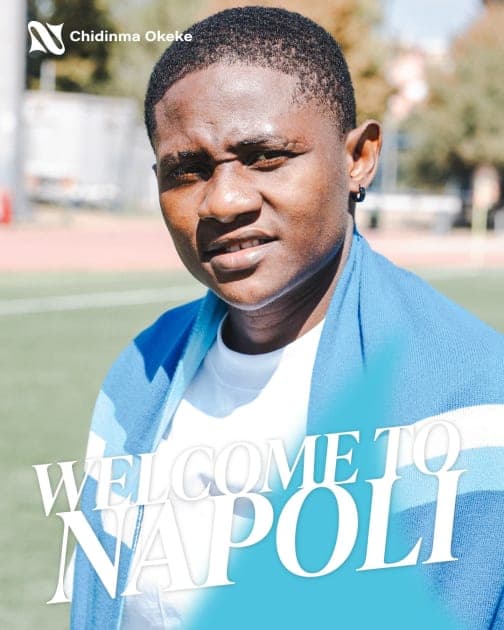
Super Falcons Defender Chidinma Okeke Joins Napoli Femminile
Super Falcons defender Chidinma Okeke has joined Italian Serie A club Napoli Femminile on a permanent transfer from Mexican side Club América. The 26-year-old Nigerian international brings extensive global experience to Naples after winning the Liga MX Femenil title and CONCACAF W Champions Cup with Club América.

Deborah Abiodun Opens Up Ahead of First-Ever Surgery: “Football Is My Life”
Nigeria international Deborah Abiodun has opened up ahead of her first-ever surgery, revealing her fears about missing football, international matches and club action after a hip injury ended her 2026 NWSL season.

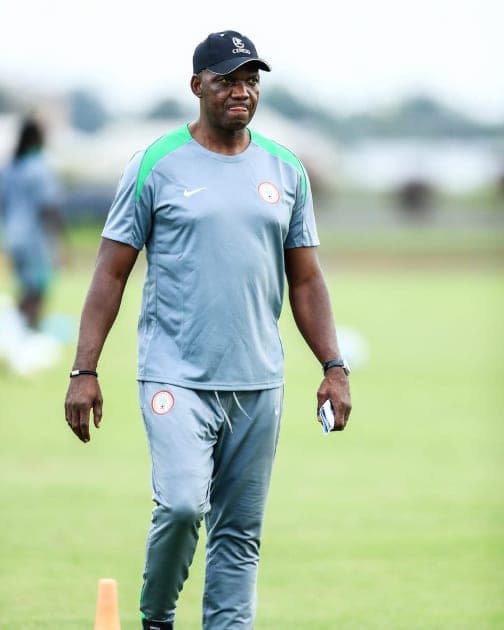
“Should the NFF prioritise a specialised women’s football coach for the Super Falcons permanent role, or is experience managing the Super Eagles enough?”
NFF named Austin Eguavoen interim Super Falcons coach for Oct Olympic qualifiers vs Comoros after Madugu’s sacking post-World Cup miss. Pros: proven crisis experience + strong women’s staff (Danjuma, Yusuf). Cons: no prior women’s coaching; feels like recycling. Fine short-term vs weak foe, but team needs specialist permanent boss.