
Nigeria D'Tigress Took 14 More Shots Than Hungary But Still Lost 71–67 at FIBA Women’s World Cup
Nigeria D’Tigress attempted 69 field goals to Hungary’s 55 but shot just 35% as Hungary secured a 71–67 win at the 2026 FIBA Women’s Basketball World Cup.
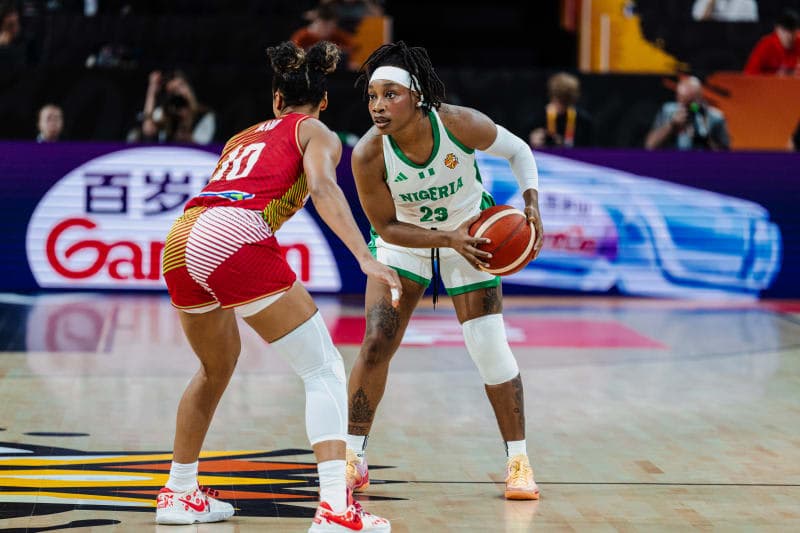
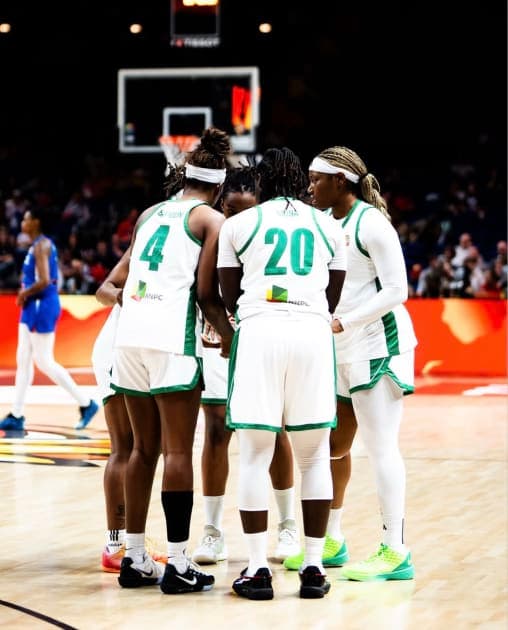
Nigeria’s D’Tigress suffered their second consecutive defeat at the 2026 FIBA Women’s Basketball World Cup after losing 71–67 to Hungary in Berlin on Saturday.
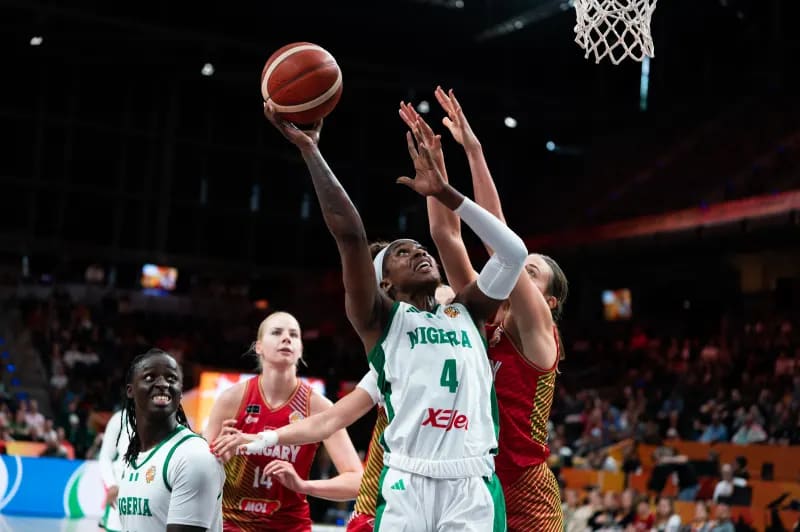
The four-point defeat was decided by a fascinating statistical contrast: Nigeria attempted 69 field goals, 14 more than Hungary’s 55, but still scored four fewer points.
Nigeria made just 24 of those 69 attempts, while Hungary converted 28 of 55.
The numbers tell the story of a game in which Nigeria had opportunities but struggled to make the most of them.
Quarter Scores
🇳🇬 Nigeria - 13 | 13 | 16 | 25 | 67
🇭🇺 Hungary - 21 | 15 | 16 | 19 | 71
Hungary established control early, taking a 21–13 lead after the opening quarter.
Nigeria improved in the second period but could only reduce the deficit slightly, with Hungary leading 36–26 at halftime.
The third quarter ended 16–16, leaving Hungary with the same 10-point advantage entering the final period.
D’Tigress then produced their strongest offensive quarter of the game, scoring 25 points in the fourth.
However, Hungary scored 19 and did enough to hold on for the victory.
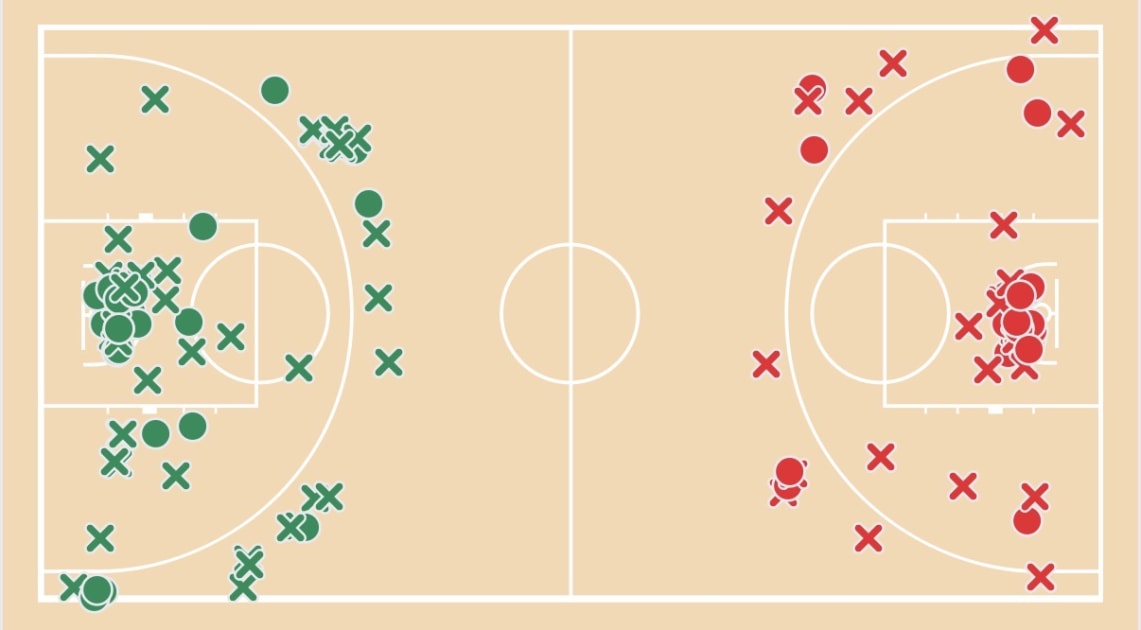
69 Shots, But Only 24 Made
The most revealing statistic from the game was Nigeria’s volume of attempts.
🇳🇬 Nigeria - 69 field-goal attempts
🇭🇺 Hungary - 55 field-goal attempts
Nigeria therefore attempted 14 more shots than Hungary.
But the shooting percentages were heavily in Hungary’s favour.
🇳🇬 Nigeria - 24/69 (35%)
🇭🇺 Hungary - 28/55 (51%)
Nigeria had more opportunities, but Hungary was far more efficient.
This was particularly noticeable on two-point attempts.
🇳🇬 Nigeria 2PT - 17/44 (39%)
🇭🇺 Hungary 2PT - 24/41 (59%)
Hungary made seven more two-point shots despite attempting three fewer.
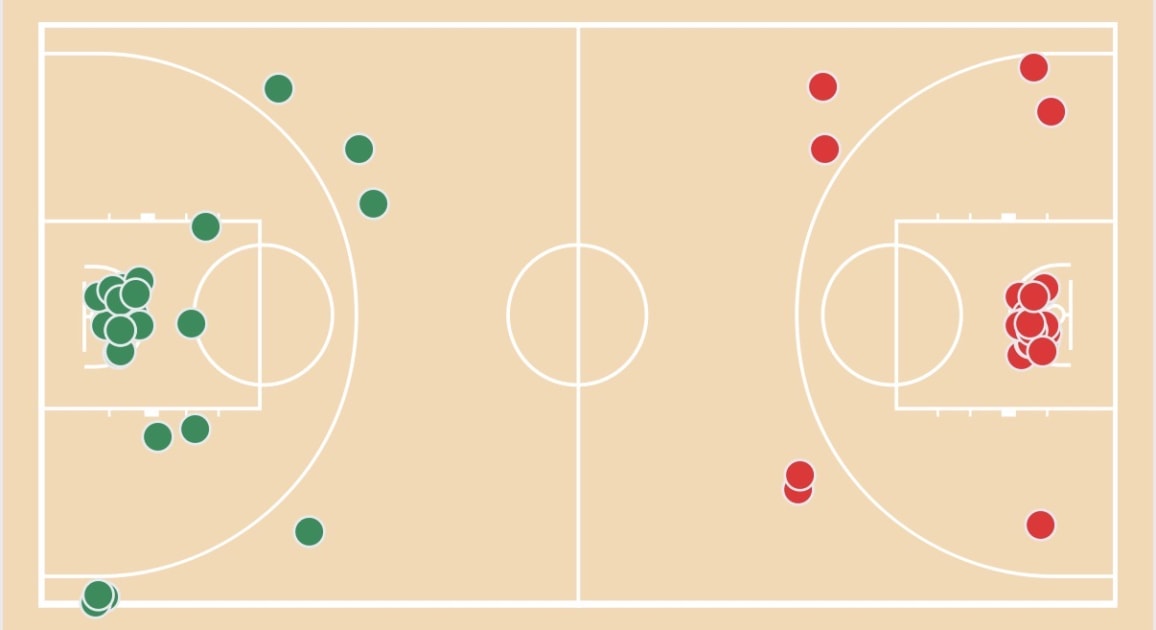
Points made by Nigeria and Hungary during the game.
Nigeria's Three-Point Shooting Was Also Limited
Nigeria attempted 25 three-pointers but made only seven.
🇳🇬 Nigeria - 7/25 (28%)
🇭🇺 Hungary - 4/14 (29%)
Although Nigeria made three more three-pointers than Hungary, the difference was not enough to compensate for their struggles from inside the arc.
Nigeria's overall field-goal percentage of 35% was the biggest shooting issue.
Free Throws Left More Points Behind
Nigeria also struggled from the free-throw line.
D’Tigress went 12-of-23, shooting 52%.
Hungary converted 11 of 19 for 58%.
🇳🇬 Nigeria - 12/23 (52%)
🇭🇺 Hungary - 11/19 (58%)
With the final margin only four points, Nigeria's 11 missed free throws stand out as another missed opportunity.
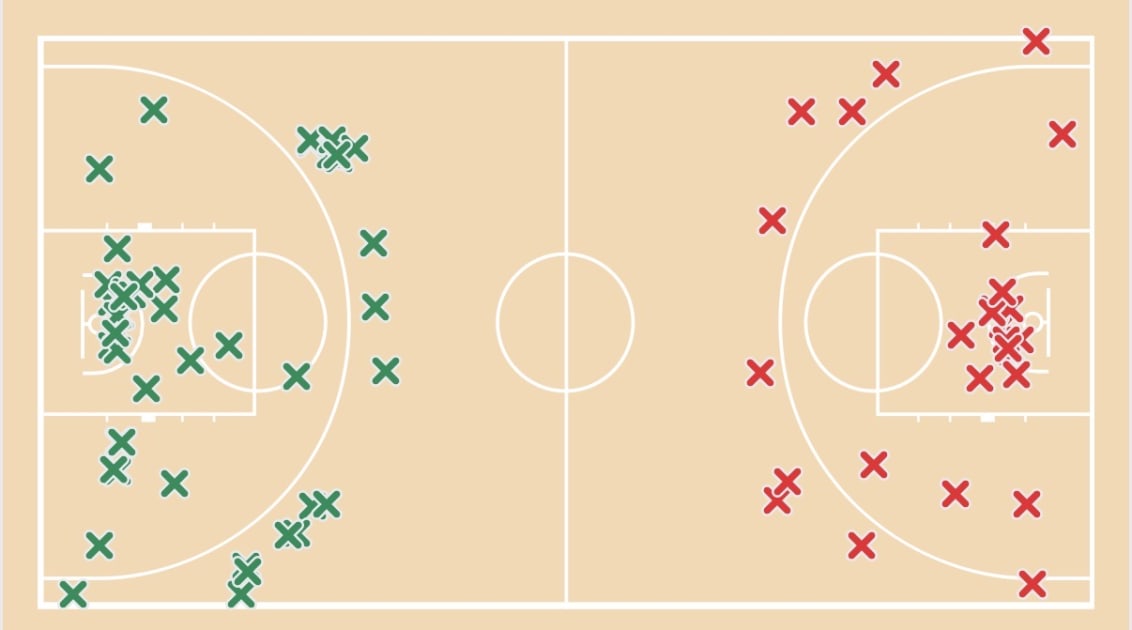
Points lost through missed scoring opportunities during the game.
Hungary Dominated the Rebounds
While Nigeria had the advantage in shot attempts, Hungary controlled one of the most important areas of the game — rebounding.
🇭🇺 Hungary - 48 rebounds
🇳🇬 Nigeria - 31 rebounds
That gave Hungary a 17-rebound advantage.
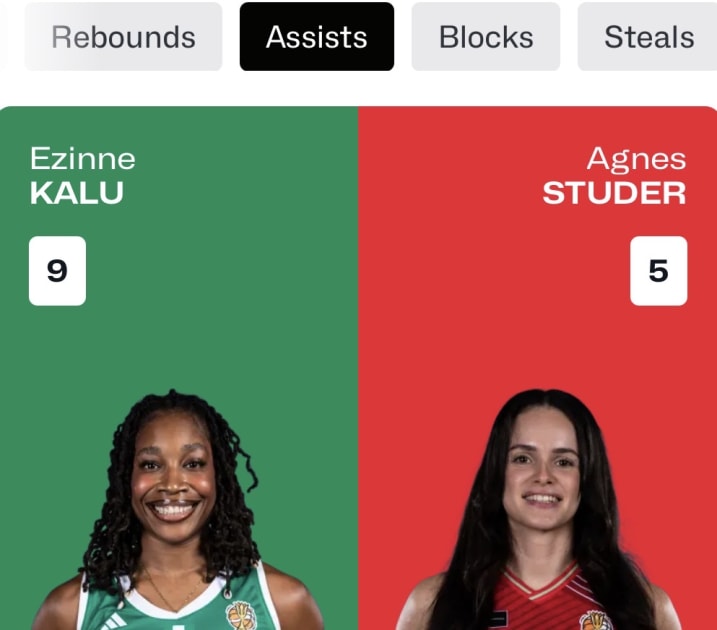
Dorka Juhász was outstanding on the boards, collecting 16 rebounds by herself.
Virag Takacs-Kiss added 14 rebounds, meaning the two Hungary players combined for 30 rebounds.
Amy Okonkwo led Nigeria with six rebounds.
The rebounding difference helped Hungary control possessions despite taking fewer shots overall.
Amy Okonkwo Leads Nigeria
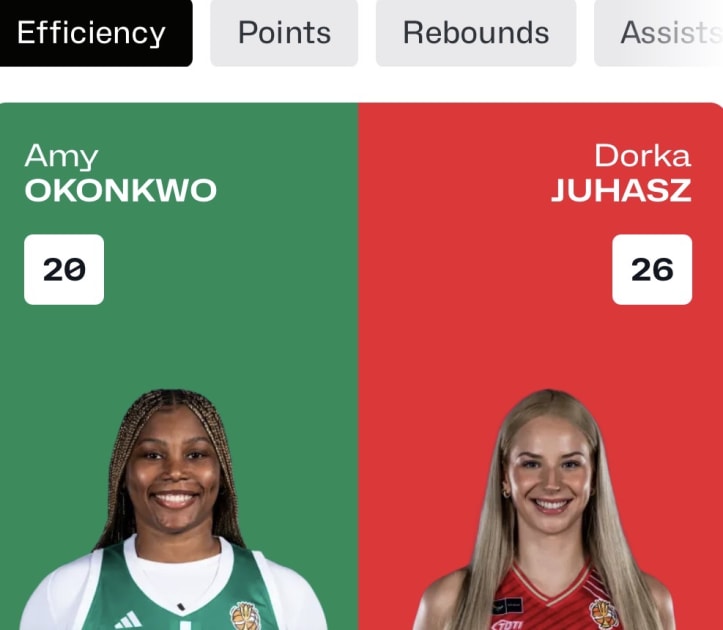
Amy Okonkwo was Nigeria's leading scorer with 17 points.
She finished 5-of-10 from the field, including 3-of-6 on two-point attempts and 2-of-4 from three-point range.
She also contributed six rebounds, five assists and two steals.
Amy Okonkwo:
17 points
6 rebounds
5 assists
2 steals
5/10 FG
2/4 3PT
20 efficiency rating
Elizabeth Balogun added 13 points and four rebounds.
She shot 5-of-12 overall, including an efficient 3-of-4 from two-point range, but struggled from three-point distance, making just 2-of-8 attempts.
Ezinne Kalu finished with 11 points and was Nigeria's leading playmaker with nine assists.
Murjanatu Musa scored 10 points, while Victoria Macaulay also contributed 11 points after shooting 4-of-7 from the field.
Kalu's Nine Assists Stand Out
Kalu's nine assists were one of Nigeria's brightest statistical performances.
Nigeria finished with 12 assists as a team, compared with 10 for Hungary.
However, Kalu struggled to convert her own scoring opportunities.
She scored 11 points from 4-of-15 shooting, including 4-of-12 on two-point attempts and 0-of-3 from three-point range.
The numbers suggest Nigeria were capable of creating opportunities but were not efficient enough when those opportunities arrived.
Juhász Leads Hungary's Response
Hungary had three players score at least 14 points.
Dorka Juhász led all scorers with 19 points.
She shot 9-of-15 from the field and was particularly effective inside, making eight of her 11 two-point attempts.
She also grabbed 16 rebounds and finished with an efficiency rating of 26.
Virag Takacs-Kiss recorded 17 points and 14 rebounds, while Reka Lelik added 14 points.
The trio combined for 50 of Hungary's 71 points.
The Numbers That Decided the Game
🇳🇬 Nigeria - 67 points
🇭🇺 Hungary - 71 points
🇳🇬 Field goals - 24/69 (35%)
🇭🇺 Field goals - 28/55 (51%)
🇳🇬 Two-pointers - 17/44 (39%)
🇭🇺 Two-pointers - 24/41 (59%)
🇳🇬 Three-pointers - 7/25 (28%)
🇭🇺 Three-pointers - 4/14 (29%)
🇳🇬 Free throws - 12/23 (52%)
🇭🇺 Free throws - 11/19 (58%)
🇳🇬 Rebounds - 31
🇭🇺 Rebounds - 48
🇳🇬 Assists - 12
🇭🇺 Assists - 10
🇳🇬 Turnovers - 20
🇭🇺 Turnovers - 24
More Attempts, Less Efficiency
Ultimately, the 14-shot difference did not translate into an advantage for Nigeria.
D’Tigress had 69 field-goal attempts compared with Hungary's 55, but Hungary made four more shots.
The difference was efficiency.
Hungary shot 51% from the field, compared with Nigeria's 35%.
Hungary also dominated the rebounding battle by 17 and had a significant advantage in two-point shooting.
Nigeria's 25-point fourth quarter showed the team could produce offensively when it found rhythm, but the slow start and inefficient shooting over the first three quarters left too much ground to recover.

Nigeria's Tournament Situation
The defeat leaves Nigeria with two losses from their opening two Group B games after also losing to South Korea in their opening fixture. D’Tigress will face France in their final group game on Monday, September 7.
The game is scheduled for 2:30 PM local time in Berlin and 1:30 PM Nigerian time.
After two defeats, Nigeria will need a significantly more efficient shooting performance and a stronger showing on the boards as they look to finish the group stage on a positive note.
Enjoyed this story?
Reporting like this is funded by readers. A one-off gift keeps it coming.
Keep reading
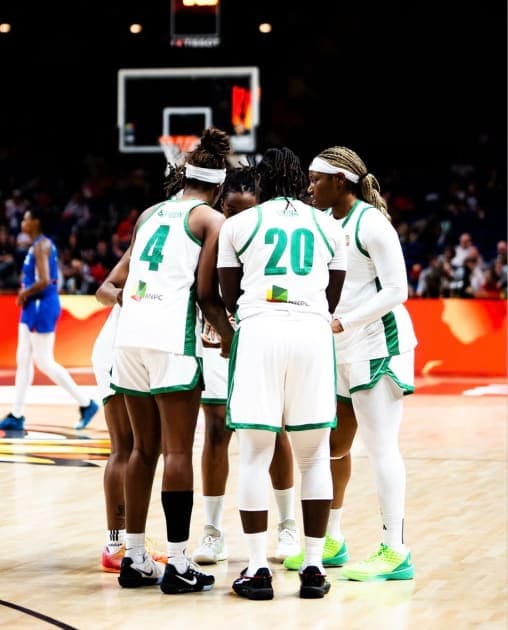
D’Tigress Thank Tinubu As Presidential Financial Rewards Hit Players’ Accounts
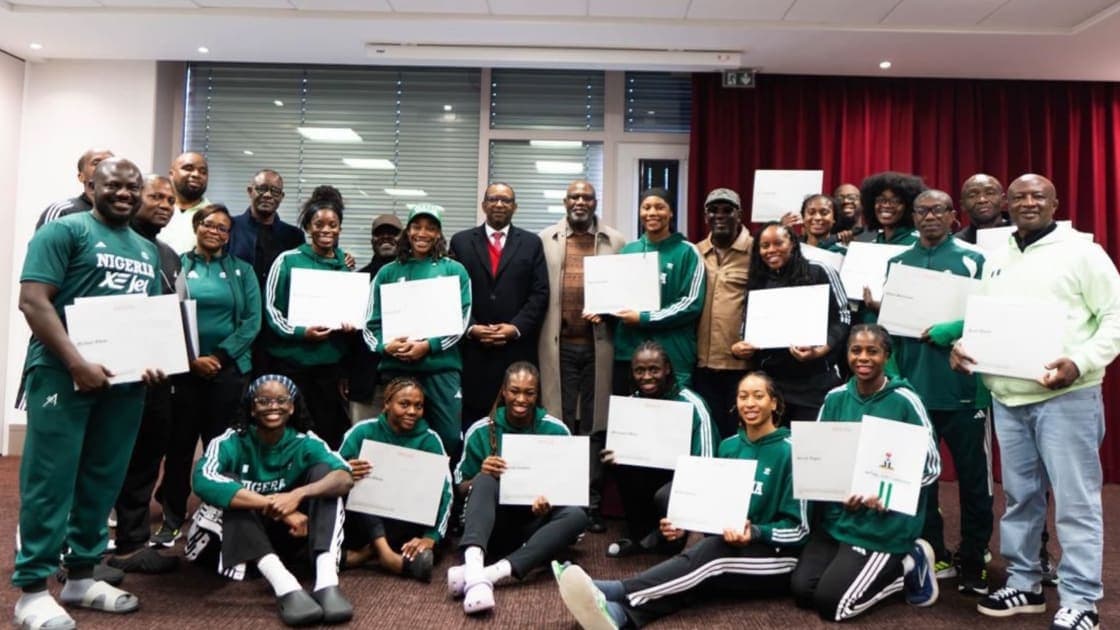
D’Tigress players and officials have received President Bola Tinubu’s outstanding financial rewards following their historic 2025 FIBA Women’s AfroBasket triumph, with players receiving the naira equivalent of $100,000 each.
D’Tigress Players Receive $100,000 Presidential Cash Reward, NSC Confirms
The National Sports Commission has confirmed that the naira equivalent of $100,000 was paid to each D’Tigresses player and $50,000 to team officials on 9 September 2026, completing the cash part of President Tinubu’s reward for their fifth consecutive AfroBasket title.

FIBA Confirms Dates for 2027 Women’s AfroBasket
SEO Summary: FIBA has confirmed July 23 to August 1, 2027, as the dates for the Women’s AfroBasket, with Nigeria’s D’Tigress set to defend their continental title.