
D’Tigress Were Prepared. So Why Did It All Fall Apart?
Nigeria invested weeks, camps and international games into its World Cup preparation. But travel, competitive rhythm, coaching availability and deeper structural questions suggest that preparation may not have been the problem, the way Nigeria prepared might have been.
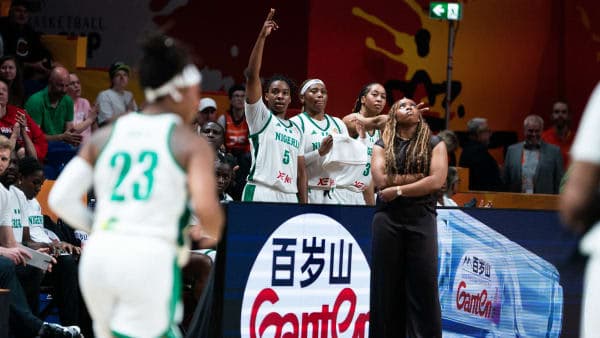
Nigeria went to Berlin with an extensive preparation programme behind them.
They left the United States for China. From China, they travelled to Tenerife. Then came Zaragoza. Finally, Berlin.
There were training camps, international games and weeks of preparation.
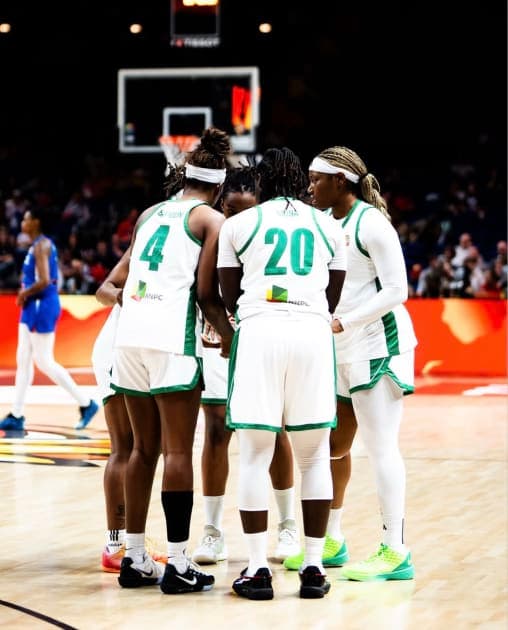
And yet, D’Tigress left the 2026 FIBA Women’s Basketball World Cup without a win.
Nigeria lost 99–81 to South Korea, 71–67 to Hungary and 111–56 to France. It was the country’s first winless World Cup campaign since 2006, when Nigeria also lost all five of its games.

That is what makes this failure difficult to explain. This was not a team that simply arrived at the World Cup unprepared.
So perhaps the more uncomfortable question is: Was Nigeria prepared the wrong way?
The preparation was extensive. But was it the right preparation?
On paper, the NBBF did a lot.
D’Tigress began their final World Cup build-up in Chicago from July 29 to August 2. They then travelled to China for a three-game series, before moving to Tenerife and eventually Zaragoza for the final phase of preparation.
The China series ended with a win, 88–77, after Nigeria had lost the first two games 70–67 and 69–65.
In Tenerife, Nigeria faced Spain and Belgium before moving to Zaragoza, where they played Mali and Puerto Rico.
Then came Berlin.
The federation could therefore reasonably argue that the team had games, training and exposure against different levels of opposition.
But preparation is not simply about how many days a team spends together or how many games it plays.
It is also about what those days look like.
Nigeria's preparation involved considerable movement.
Chicago.
China.
Tenerife.
Zaragoza.
Berlin.
That is a lot of travelling in a relatively short period. And this is where another question deserves to be asked.
Did the travel itself become part of the preparation problem?
An insider familiar with the team's preparations pointed to the constant movement between camps and cities as another factor worth considering.
The argument is not that travelling automatically makes a team perform badly.
Elite teams travel all the time. The question is whether Nigeria's preparation could have been more geographically stable and therefore allowed more time for recovery, tactical work and building rhythm.
Nigeria travelled to Spain for the Tenerife phase, where they faced Spain and Belgium, before moving to Zaragoza for another camp and more games.
Spain, meanwhile, had the advantage of preparing in a more familiar environment during that phase. That difference matters.
A national team preparing for a major tournament has a limited amount of time to build chemistry and tactical understanding. Every additional flight, hotel change, and transition is time and energy that has to be managed.
So perhaps the question is not: “Did Nigeria prepare enough?”
It is: “Could Nigeria have achieved more from the same preparation time with fewer logistical disruptions?”
That distinction matters.
Because the problem may not have been a lack of preparation. It may have been the structure of the preparation.
Can training replace competition?
There is another issue that is harder to ignore. The players had played plenty of basketball over the course of their respective seasons.
So this is not an argument that D’Tigress players simply lacked playing time.
The more specific question is about competitive rhythm immediately before the World Cup.
Several players had long gaps between the end of their club or college seasons and the beginning of the World Cup.
Ezinne Kalu, for example, had not played a club game since March.
Jordan Obi's NCAA season had ended months earlier.
Victoria Macaulay's Turkish season had also finished months before the World Cup.
Others had similarly lengthy gaps.
Then there was Amy Okonkwo.
She had the unusual advantage of arriving at the World Cup having played three competitive games for the Portland Fire in August, immediately before joining up with Nigeria.
That does not prove that Okonkwo's recent competitive rhythm was the reason she performed differently.
Nor does it prove that the players with longer gaps were unprepared. But it raises a legitimate question.
Can several weeks of national-team preparation completely replace the competitive rhythm players lose when they go months without meaningful games?
Training can replicate many things.
It can replicate tactical situations.
It can improve fitness.
It can build chemistry.
But there is something different about a competitive game.
The pressure.
The decision-making speed.
The physicality.
The consequences of mistakes.
And perhaps most importantly, the feeling of having to execute against an opponent that is actively trying to stop you.
That is something training cannot completely reproduce.
Maybe Nigeria's preparation should therefore have been designed not just around getting the players together, but around understanding where each player was in her competitive cycle.
Who was coming off a long season?
Who had been inactive for weeks?
Who was already playing competitive basketball?
Who needed more conditioning?
Who needed more game exposure?
Those are different problems.
Perhaps they should have received different solutions.
Then there is the Rena Wakama question
Rena Wakama is an uncomfortable part of this conversation because her record does not support an easy “bad coach” conclusion.
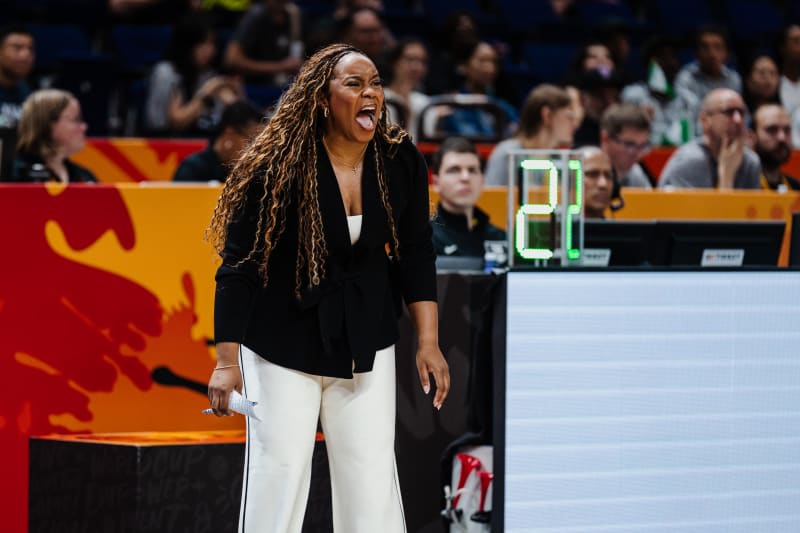
Under Wakama, D’Tigress won the 2023 and 2025 AfroBasket titles.
She also led Nigeria to the quarter-finals of the 2024 Paris Olympics — the first African women's basketball team to reach that stage of the Olympics.
She was even named FIBA's Best Coach of the 2024 Olympic women's basketball tournament.
So this is not about pretending that Wakama suddenly became a poor coach.
But her availability for this World Cup deserves scrutiny.
Wakama was also working as an assistant coach with the WNBA's Chicago Sky.
That commitment meant she remained in the United States while D’Tigress continued parts of their World Cup preparations without her. Premium Times reported that she was combining her Nigeria head-coaching responsibilities with her Chicago Sky role.
She also missed Nigeria's April tour of the United States because of her Chicago commitments.
Then came the World Cup.
Wakama said she only learned a few days before leaving the United States that she would be travelling to Berlin, and she joined D’Tigress just four days before their opening game.
Four days.
For a tournament in which Nigeria had three group games in four days.
That is not enough time to build an entirely new team, but it is certainly a short window for a coach to reconnect with a group after being away from parts of its preparation.
And there is another claim that deserves to be treated carefully.
I have heard from a source familiar with the situation that Wakama is not paid by the Nigeria Basketball Federation for her role as D’Tigress head coach.
That claim has not been publicly verified, so it should not be presented as fact.
But if it is true, it raises a much bigger institutional question.
Why should Nigeria expect full-time national-team availability from a coach whose national-team role is not a full-time paid position?
If a coach has to rely on another professional job, then the issue may not be commitment.
It may be structure.
Perhaps Nigeria needs to decide what it actually wants from its national-team head coach.
A full-time coach?
A coach with clearly defined national-team windows?
A stronger assistant-coaching structure capable of maintaining continuity when the head coach is unavailable?
Or some formal arrangement that allows the head coach to remain involved remotely while professional commitments are ongoing?
Wakama's situation should therefore be viewed as a federation-management question as much as a coaching question.
But maybe the problem started before the World Cup
There is another reason why it would be too simplistic to blame Wakama's late arrival.
The warning signs were already there.
At the World Cup qualifying tournament in Lyon earlier in the year, Nigeria finished with a 2–3 record.
They beat Colombia and the Philippines but lost to South Korea, France and Germany.
Those were three losses against teams Nigeria would need to compete with at the global level.
That matters.
Because if the team was already struggling against elite opposition in March, then the World Cup problems cannot simply be explained by a coach arriving four days before the tournament.
The late arrival may have contributed.
The travel may have contributed.
Competitive rhythm may have contributed.
But there were deeper issues.
And that brings us to the uncomfortable possibility that Nigeria's dominance in Africa may have been hiding some of them.
Has Africa's dominance hidden the bigger problem?
D’Tigress have won five consecutive AfroBasket titles. That is an extraordinary achievement. But dominance in Africa and competitiveness against the world's best are two different tests.
Nigeria can be the best team on the continent and still have significant weaknesses against the top teams in Europe, Asia and North America.

The problem is that winning Africa can create the illusion that everything is fine.
It is not.
The rest of the world is improving.
France can put 111 points on Nigeria.
South Korea can score 99.
And France's 22 three-pointers against Nigeria set a new Women's World Cup record.
That should force a serious examination of where Nigerian basketball currently stands internationally.
Are Nigeria's domestic structures improving quickly enough?
Is the national team being challenged enough between major tournaments?
Are players being exposed to enough high-level competition?
Are we developing systems that can compete with the tactical and technical evolution of the best teams?
Or have the AfroBasket titles allowed Nigeria to measure progress primarily against Africa while the global standard continues moving?
Where is the next D’Tigress coming from?
This leads to another issue that should not be ignored. Nigeria did not have a home-based player on this World Cup roster. That, by itself, is not necessarily a problem. Selection should be based on quality.
If the best Nigerian players are playing professionally overseas, then they should play for the national team.
There should be no tokenism simply to create the appearance of domestic representation.
But there is a difference between having no home-based player and having a domestic basketball system that cannot consistently produce players good enough to challenge those abroad.
That is the concern.
Nigeria should have young players coming through the domestic system who can eventually make national-team selection genuinely competitive. Not because they must be selected. Because they are good enough to demand consideration. Where are the 18-, 19-, and 20-year-olds who should be knocking on the door?
How many are being monitored?
How many are receiving elite-level coaching?
How many are playing enough competitive basketball?
And how many could realistically challenge established D’Tigress players within the next three or four years?
A national team cannot depend indefinitely on the same generation.
At some point, succession becomes unavoidable.
And now the NBBF has a choice
The easy response to this World Cup would be to change a few players. Perhaps change some tactics. Perhaps blame the coach. Perhaps wait for the next AfroBasket and assume normal service will resume. That would miss the bigger opportunity.
Nigeria needs to use this tournament as an audit.
Not an emotional reaction.
An audit.
How many days did every player spend together?
How many competitive games did they play?
How much travel did the team undertake?
How much recovery time did they have between camps and games?
How much time did the head coach actually spend with the group?
What tactical concepts were introduced, and how much time was available to reinforce them?
What happened during the March qualifiers?
How many young players are currently being monitored?
What is the pathway from Nigerian domestic basketball to D’Tigress?
And perhaps most importantly:
What should D’Tigress' preparation look like over the next two years rather than the next six weeks?
The NBBF also has an institutional decision to make.
If the federation wants a national team capable of competing consistently at the highest level, then preparation cannot begin a few weeks before a major tournament.
There needs to be year-round planning.
A wider player pool.
Regular monitoring.
More high-level competition.
A clear coaching structure.
A defined plan for player availability.
And a domestic pathway that produces genuine alternatives.
The next AfroBasket will probably provide Nigeria with another opportunity to dominate Africa.
But that cannot be the only benchmark.
The real question is whether Nigeria can use the AfroBasket cycle to close the gap between being the best team in Africa and being a team capable of consistently challenging the world's best.
We don't know yet
Perhaps the most honest conclusion is that we do not yet know exactly why D’Tigress failed in Berlin.
Maybe the competitive gaps mattered.
Maybe the travelling mattered.
Maybe the late arrival of the head coach mattered.
Maybe the March qualifying campaign exposed problems that were never fully solved.
Maybe the preparation was extensive but not optimised.
Maybe the global game has simply moved faster than Nigeria has.
And perhaps it was all of these things at once.
What we should avoid is pretending there is one convenient explanation.
D’Tigress were not unprepared.
The federation clearly invested time, travel and resources into getting the team ready.
But preparation is not measured only by how much you do.
It is measured by whether what you do prepares you for what you are about to face.
Nigeria prepared.
The question is whether Nigeria prepared the right way.
Enjoyed this story?
Reporting like this is funded by readers. A one-off gift keeps it coming.
Keep reading
D’Tigress Thank Tinubu As Presidential Financial Rewards Hit Players’ Accounts
D’Tigress players and officials have received President Bola Tinubu’s outstanding financial rewards following their historic 2025 FIBA Women’s AfroBasket triumph, with players receiving the naira equivalent of $100,000 each.
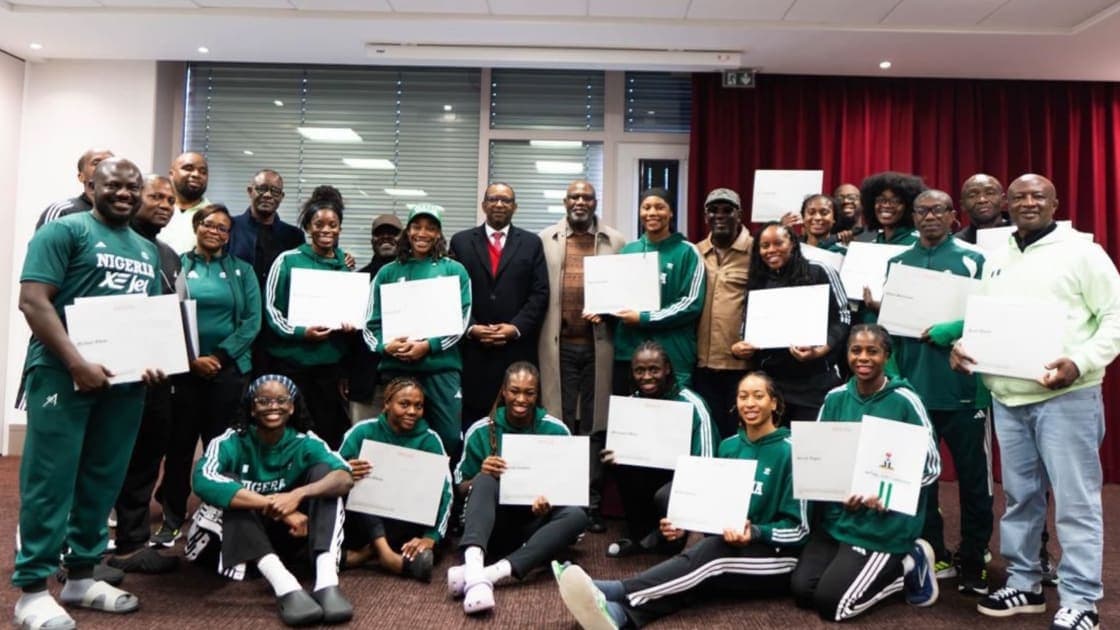
D’Tigress Players Receive $100,000 Presidential Cash Reward, NSC Confirms
The National Sports Commission has confirmed that the naira equivalent of $100,000 was paid to each D’Tigresses player and $50,000 to team officials on 9 September 2026, completing the cash part of President Tinubu’s reward for their fifth consecutive AfroBasket title.

FIBA Confirms Dates for 2027 Women’s AfroBasket
SEO Summary: FIBA has confirmed July 23 to August 1, 2027, as the dates for the Women’s AfroBasket, with Nigeria’s D’Tigress set to defend their continental title.