
D’Tigress vs Hungary: How Wakama’s Side Look to Respond to Opening Day Defeat
After an 18-point defeat to South Korea, D’Tigress face a Hungary side also looking to recover from a heavy opening-day loss to France.

A World Cup campaign can change very quickly.
For Nigeria, Friday’s 99–81 defeat to South Korea was a reminder that being competitive for 30 minutes is not enough at this level. For Hungary, their return to the World Cup after 28 years began with an even harsher reality check, a 99–53 demolition by France.
Now, both teams meet in Berlin knowing that this is the game they can ill afford to lose.
But the numbers suggest Nigeria have a clearer route to victory.
Nigeria’s opener was not as bad as the score suggests
The 18-point defeat to South Korea looks comprehensive, but the underlying numbers tell a more complicated story.
D’Tigress shot 50% from the field and 58.7% on two-point attempts, actually finishing more efficiently inside the arc than Korea. Nigeria also won the rebounding battle, 39–29.
The problem was what happened around those strengths.
Nigeria committed 23 turnovers, more than twice Korea’s 10, while Korea turned those possessions into 28 points. And when Nigeria gave the Koreans space on the perimeter, they were punished: Korea made 14 of 28 three-pointers at 50%, compared with Nigeria’s 6 of 20.
That is a huge 24-point difference from beyond the arc.
The other concern was ball movement. Korea produced 32 assists to Nigeria’s 17.
So Nigeria did not necessarily lose because they could not score. They lost because they gave Korea too many possessions and too many clean shots.
That is the first adjustment for Rena Wakama.
Against Hungary, the objective has to be simple: fewer empty possessions and better defensive discipline.
Hungary has a completely different problem
Hungary's 99–53 loss to France was not a game that slipped away late.
It was over almost immediately.
France led 29–11 after the first quarter and 61–20 at halftime. Hungary shot just 32% from the field, including 26.3% from three, while France shot 52% overall and 42.9% from deep.
The biggest warning sign, however, was Hungary's inability to deal with defensive pressure.
France forced 22 turnovers, converting those mistakes into 29 points. Hungary struggled to generate clean looks, struggled to get their offence flowing, and spent much of the game playing from behind.
That makes this matchup particularly interesting.
Nigeria's defensive pressure can recreate some of the problems France caused, but D'Tigress cannot afford to fall into the trap of allowing Hungary's best players to dictate the game.
Everything starts with Dorka Juhász
Hungary's offensive ceiling is closely tied to Dorka Juhász.
FIBA identified the 1.95m forward as the centrepiece of Hungary's World Cup campaign after her outstanding qualifying tournament, where she scored 35 points against Japan and later added 24 against Türkiye.
She had a much quieter World Cup opener against France, finishing with 10 points and 10 rebounds.
That is where Nigeria have an opportunity.
Murjanatu Musa and Victoria Macaulay give D'Tigress the size and physicality to make life difficult for Juhász. But the challenge is not simply to stop her from scoring.
Nigeria have to stop Hungary from building their offence around her.
If Juhász catches the ball comfortably in advantageous positions, Nigeria will be forced to collapse, and that creates opportunities for Reka Lelik, Debora Dubei, Reka Dombai and the rest of Hungary's perimeter players.
If Nigeria can deny those easy entries and make Hungary initiate possessions further away from the basket, the pressure shifts onto a team that already showed against France that it can struggle when its first option is taken away.
Nigeria's biggest advantage may actually be the paint
This is where I expect D'Tigress to attack.
Nigeria shot nearly 59% on two-point attempts against Korea despite the defeat. That is significant because Hungary just allowed France to shoot 62.5% from two-point range.
Those two numbers point towards the same tactical idea:
Get the ball inside.
Nigeria have the physicality to attack Hungary's frontcourt repeatedly through Musa, Macaulay and their driving guards. If Hungary sends aggressive help, Nigeria should be able to create kick-out opportunities rather than forcing contested shots.
Amy Okonkwo is particularly important here.
She scored 20 points against Korea and was one of Nigeria's most reliable offensive players. If Hungary focuses heavily on the interior, Okonkwo's ability to attack closeouts and punish defensive rotations becomes even more valuable.
Nigeria should not try to win this game by becoming a jump-shooting team.
They should make Hungary defend their size.
But Nigeria must not give Hungary a way back
This is where I expect the game to be decided.
Hungary cannot afford another 46-point defeat. They will come into this game with more urgency, and that makes the opening quarter important.
Nigeria cannot repeat the sloppy possessions that allowed Korea to establish control.
The 23 turnovers against Korea are simply too many.
Even reducing that number to around 14–15 would represent a significant improvement. Nigeria do not need to play perfect basketball; they need to stop gifting opponents extra possessions.
And defensively, the priority should be obvious:
Run Hungary off the three-point line, but do not over-help.
The temptation will be to pack the paint around Juhász. Nigeria should resist excessive help because Hungary need perimeter production to stretch the floor.
The ideal defensive possession is one where Juhász receives the ball away from the basket, is forced into a difficult decision, and Hungary's next player has to create rather than simply receive an open shot.
How I expect Nigeria to win
I expect D'Tigress to lean into a more physical game.
Attack the paint.
Use Musa and Macaulay to test Hungary's interior defence.
Let Okonkwo and Ezinne Kalu create advantages from the perimeter.
And, most importantly, turn defence into offence without turning every possession into a frantic transition.
Nigeria already demonstrated against Korea that they can score efficiently.
The next step is making that efficiency sustainable.
If D'Tigress can keep turnovers below 15, win the rebounding battle again and hold Hungary below roughly 30% from three, I think Nigeria have enough offensive firepower to control this game.
Hungary's best chance is to make Nigeria impatient.
Nigeria's best chance is to make Hungary uncomfortable.
Prediction
This should be much closer than Hungary's opening game against France, but I expect Nigeria to have too much physicality and too many ways to score.
The fascinating part is that Nigeria does not need a spectacular offensive performance.
They simply need to stop beating themselves.
Prediction: Nigeria 82–70 Hungary.
I expect a competitive first half before D'Tigress' defensive pressure and superior interior presence begin to separate the teams in the second half.
For Nigeria, this is less about revenge for the Korea defeat and more about proving that the opener was an aberration in execution rather than a reflection of their ceiling.
Enjoyed this story?
Reporting like this is funded by readers. A one-off gift keeps it coming.
Keep reading
D’Tigress Thank Tinubu As Presidential Financial Rewards Hit Players’ Accounts
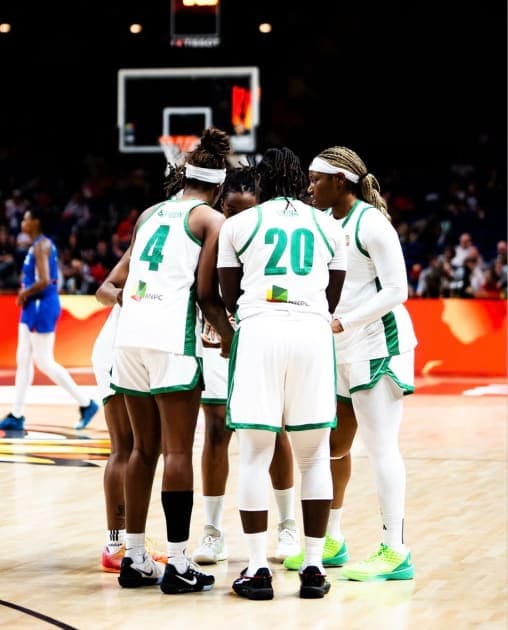
D’Tigress players and officials have received President Bola Tinubu’s outstanding financial rewards following their historic 2025 FIBA Women’s AfroBasket triumph, with players receiving the naira equivalent of $100,000 each.
D’Tigress Players Receive $100,000 Presidential Cash Reward, NSC Confirms
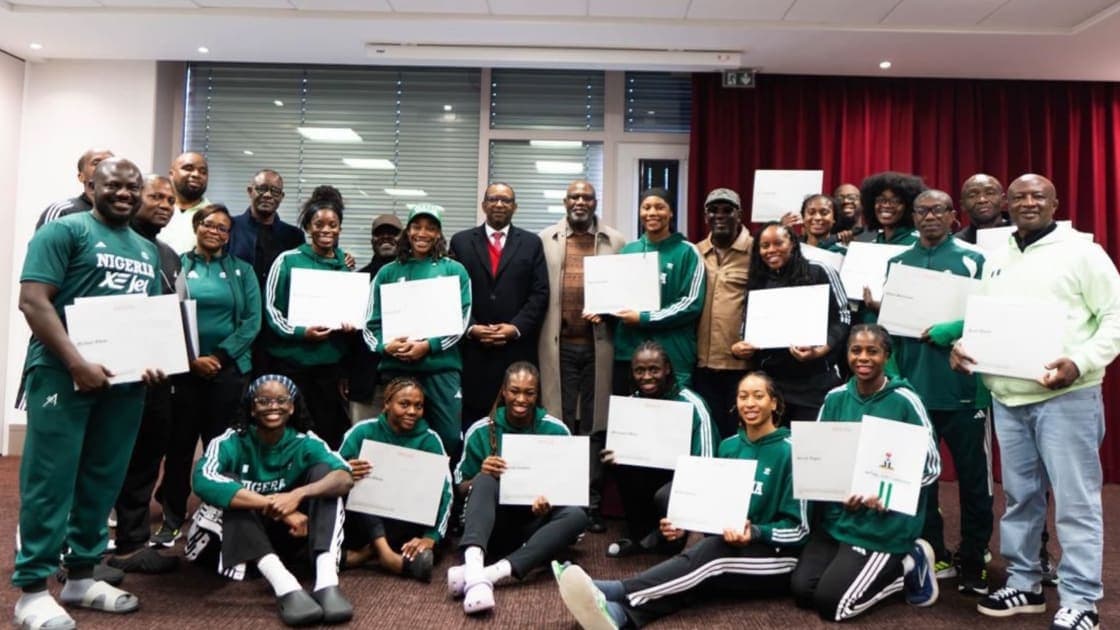
The National Sports Commission has confirmed that the naira equivalent of $100,000 was paid to each D’Tigresses player and $50,000 to team officials on 9 September 2026, completing the cash part of President Tinubu’s reward for their fifth consecutive AfroBasket title.

FIBA Confirms Dates for 2027 Women’s AfroBasket
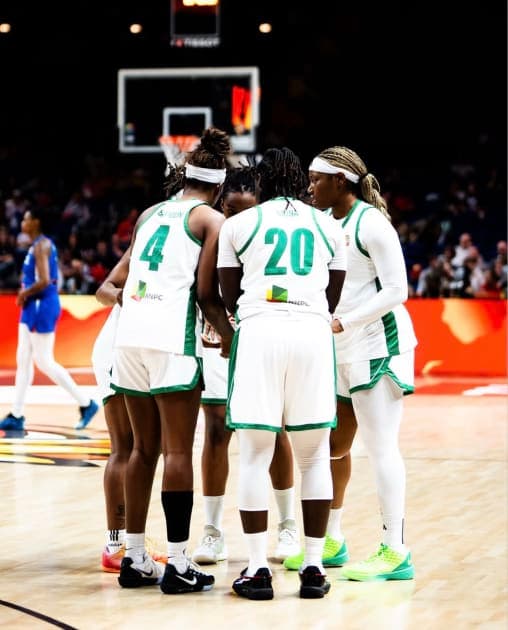
SEO Summary: FIBA has confirmed July 23 to August 1, 2027, as the dates for the Women’s AfroBasket, with Nigeria’s D’Tigress set to defend their continental title.