
D’Tigress’ 3 Losses: The Bigger Conversation Nigerian Basketball Must Have
Three losses expose a bigger issue: if Nigeria wants a stronger D’Tigress, the country must build a stronger basketball system at home.

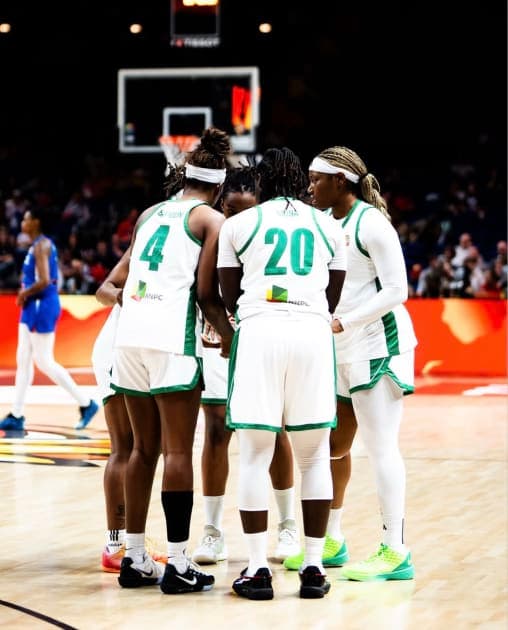
Three games. Three losses. But the conversation about D’Tigress must go beyond the results.
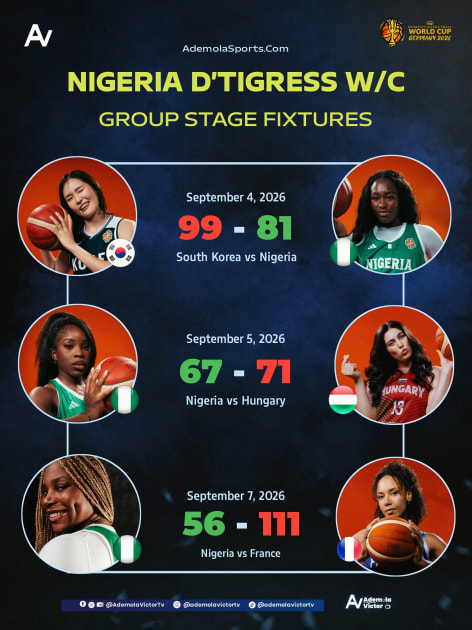
Nigeria’s D’Tigress have suffered three defeats at the FIBA Women’s Basketball World Cup, and naturally, the results have raised questions about the team’s performance, preparation and direction.
Those questions are valid.
But for me, this conversation must go beyond D’Tigress.
Preparation Must Become the Standard
To be fair, the federation did provide support and some of the preparation needed for this World Cup. That is a positive step and should be acknowledged.
However, proper preparation, logistics and support should not be treated as exceptional achievements.
They should be the normal standard for every tournament cycle.
A national team should not have to depend on whether adequate preparation happens for one particular tournament. There needs to be a sustainable system that consistently gives our athletes and coaches the conditions required to compete at the highest level.
What About the Players at Home?
From my own perspective, some home-based players have also reached out to me and shared concerns about feeling overlooked when it comes to some of the basic support needed to develop into elite athletes.
That is another part of the conversation we cannot ignore.
If we want to build a stronger national team in the future, we cannot focus only on the players who have already made it to the international stage. We also have to ask what is happening to the players who are currently developing within Nigeria.
Are they getting enough competition?
Are they receiving proper coaching and conditioning?
Do they have access to quality facilities?
Are there clear pathways from grassroots basketball to the domestic league, professional basketball and eventually the national team?
These questions matter.
Appreciating Our Foreign-Based Players
At the same time, we must appreciate the foreign-born and foreign-based players who continue to represent Nigeria.
No player steps onto the court wanting to lose.
They gave their best for the country, and their experience of stronger basketball systems abroad is valuable to Nigerian basketball.
Rather than creating a divide between home-based and foreign-based players, we should be asking how we can build a system where both groups complement each other.
The experience of players developed abroad can help strengthen the national team today, while a stronger domestic system can help produce more players capable of reaching that level tomorrow.
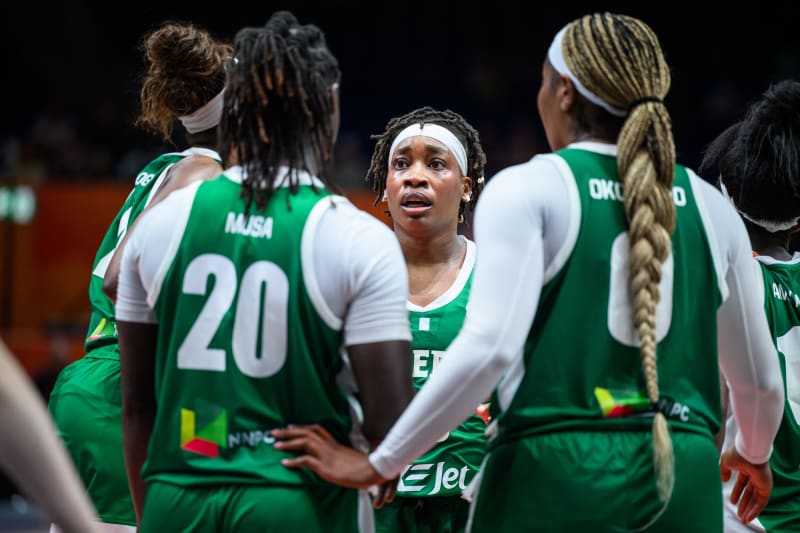
This Is Bigger Than Players and Coaches
For me, this is a combined issue.
Players, coaching, development structures and basketball administration all have a role to play.
The players deserve appreciation for representing Nigeria.
The coaching and preparation should be evaluated honestly.
And administrators must also be held accountable for improving the system that produces our national teams.
It is easy to look at three losses and search for one person or one group to blame.
But if the objective is long-term success, we need to look at the entire pathway.
Build Basketball at Home
If we want a stronger D’Tigress tomorrow, we must improve basketball at home today.
A stronger domestic league and more consistent grassroots competition can help us identify exceptional talents, develop them properly and create pathways for them to earn professional opportunities abroad.
We cannot expect elite players to appear consistently if the system beneath the national team is not consistently producing them.
This is where long-term planning becomes important.
We Don't Have to Close the Gap Overnight
Some may argue that the gap between our system and the best basketball systems abroad is simply too wide.
Perhaps it is.
But we do not have to close that gap overnight.
What if, instead, we build a system that consistently produces exceptional players who can eventually earn opportunities in stronger leagues abroad?
That should be part of the objective.
We should continue welcoming and appreciating players developed abroad while simultaneously building a stronger pipeline of players developed at home.
The two approaches do not have to compete.
They can work together.
The Bigger Picture
Three losses should hurt. They should lead to questions. They should force an honest assessment.
But they should also become an opportunity to look beyond one tournament.
If we only react when D’Tigress lose, we will keep having the same conversation every few years.
The bigger question is:
What are we doing between tournaments to ensure that Nigerian basketball becomes stronger?
That means better grassroots development.
Better domestic competition.
Better player development.
Better coaching pathways.
Better facilities.
Better sports science and athlete support.
Better administration.
And, most importantly, a system that is sustainable rather than dependent on short-term interventions.
If we want different results internationally, we have to start building a different basketball system at home.
The three losses should therefore be more than a result.
They should be a wake-up call for Nigerian basketball as a whole.
Enjoyed this story?
Reporting like this is funded by readers. A one-off gift keeps it coming.
Keep reading
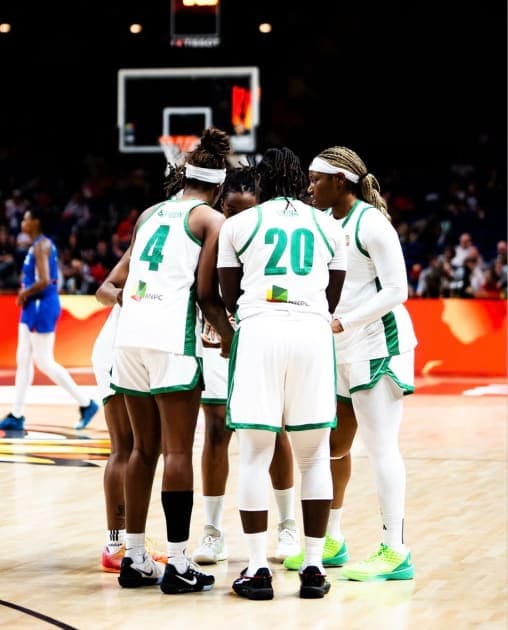
D’Tigress Thank Tinubu As Presidential Financial Rewards Hit Players’ Accounts
D’Tigress players and officials have received President Bola Tinubu’s outstanding financial rewards following their historic 2025 FIBA Women’s AfroBasket triumph, with players receiving the naira equivalent of $100,000 each.
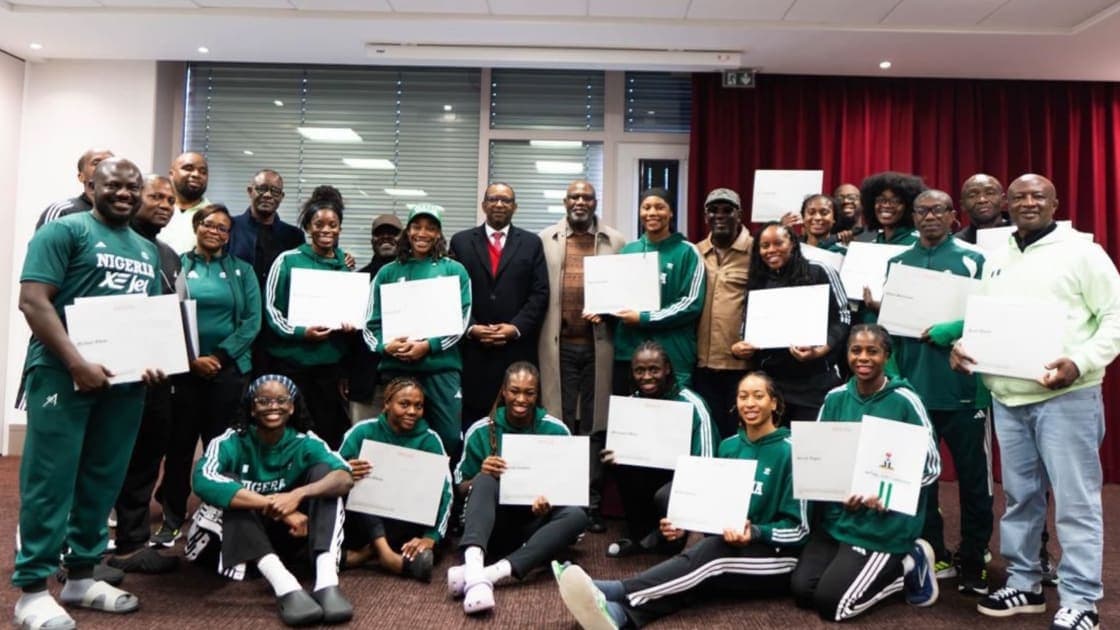
D’Tigress Players Receive $100,000 Presidential Cash Reward, NSC Confirms
The National Sports Commission has confirmed that the naira equivalent of $100,000 was paid to each D’Tigresses player and $50,000 to team officials on 9 September 2026, completing the cash part of President Tinubu’s reward for their fifth consecutive AfroBasket title.

FIBA Confirms Dates for 2027 Women’s AfroBasket
SEO Summary: FIBA has confirmed July 23 to August 1, 2027, as the dates for the Women’s AfroBasket, with Nigeria’s D’Tigress set to defend their continental title.