
Video: How South Africa Outsmarted Nigeria: Desiree Ellis Reveals the Plan Behind the 2-1 Win
Banyana Banyana coach Desiree Ellis explains the tactical changes, analysis and preparation that helped South Africa defeat Nigeria and keep their 2027 Women’s World Cup qualification hopes alive.

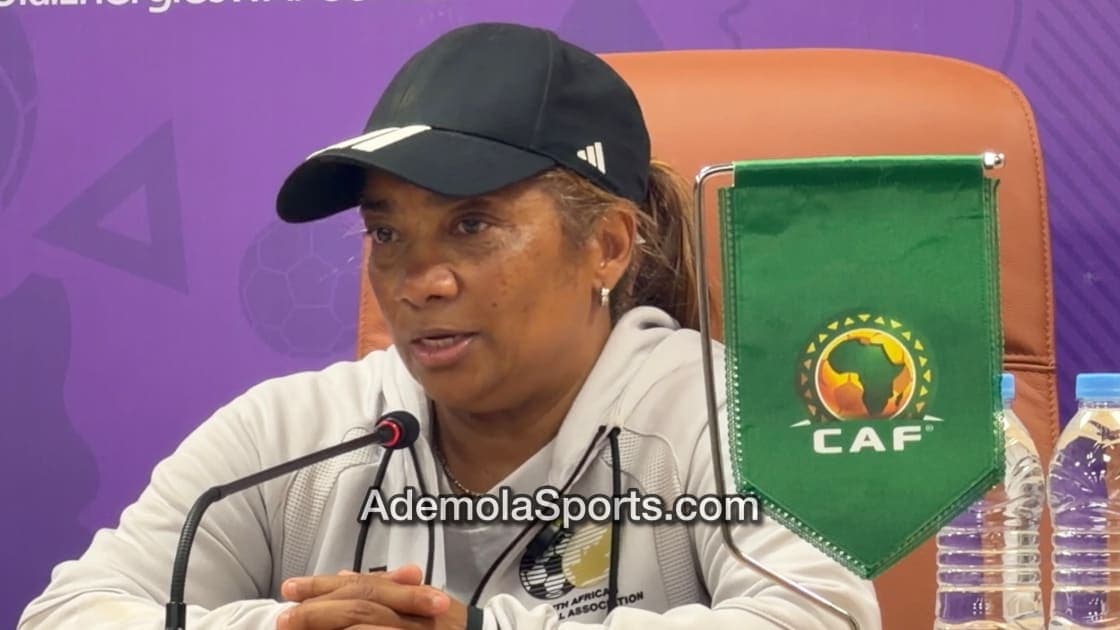
South Africa head coach Desiree Ellis says her team’s victory over Nigeria was driven primarily by their desire to keep their 2027 FIFA Women’s World Cup qualification hopes alive, rather than the rivalry between the two sides.
South Africa defeated Nigeria 2-1 to advance to the next phase of the qualification process, leaving the Super Falcons facing the possibility of missing the Women’s World Cup for the first time since the tournament began.
Ellis admitted that her side did not have everything right from the start, but praised the players for responding strongly after the break.
“I don't think it was stress. I think we just tried to make things difficult for ourselves. But the dream is still alive,” Ellis said after the match.
She acknowledged that South Africa had possession early on without creating enough danger, while Nigeria managed more shots. However, the second half brought a significant change in approach.
Ellis said her team moved the ball better after halftime, created chances and eventually took control of the match. She also singled out a crucial save from goalkeeper Kaylin Swart as an important moment in the game.
Ellis explains the tactical changes
Ellis revealed that South Africa deliberately altered their attacking setup to limit Nigeria's full-backs and create space in wide areas.
The plan was to use pace and physicality to prevent Nigeria's full-backs from pushing forward freely. Ellis explained that the positioning of Thembi Kgatlana and other attacking players helped South Africa achieve that objective.
She also credited the team's ability to hold the ball up and compete physically, saying the tactical changes eventually created the spaces South Africa were looking for.
The coach also highlighted the work of South Africa's analysts, saying they had identified Nigeria's tendency to play directly and use long balls. That information helped South Africa prepare for Nigeria's attacking options and make adjustments during the match.
‘It was about going through’
Despite the history between the two teams, Ellis played down the idea that rivalry was the main source of motivation.
“We say that it's more than just a qualifying match because it's two of the big guns,” she said, referring to the two-time WAFCON champions. But she stressed that South Africa's primary motivation was reaching the next stage of the World Cup qualification process.
For Ellis, the result was ultimately about giving South Africa another opportunity to reach the 2027 World Cup.
More preparation needed
The South African coach also used the opportunity to highlight the importance of preparation ahead of the remaining qualification rounds.
She said the team had only had limited time together and that five days was not enough to properly work on defensive organisation, attacking patterns, set pieces and finishing.
“We need more time,” Ellis said, arguing that teams can only develop properly when coaches have enough time to work with their players.
South Africa will also have an Olympic qualifier against Madagascar before the next stage of the World Cup qualification campaign. Ellis said the coming months would therefore be important for strengthening the squad and improving areas that still require work.
She particularly identified the final third as an area for improvement, noting that South Africa sometimes make the wrong decisions despite reaching promising positions.
Ellis sees a changing African women's game
The victory over Nigeria also prompted Ellis to reflect on the wider development of women's football in Africa.
She argued that the continent now has players capable of attracting greater attention from major clubs around the world, pointing to the quality on display during the tournament.
“This is not just a WAFCON or African tournament anymore,” Ellis said, suggesting that more clubs will increasingly look to African competitions to identify top talent.
She also pointed to the different levels of preparation among teams at the tournament. According to Ellis, some countries spent significantly more time in camp and played several friendly matches before the competition, while others had far less preparation time.
For South Africa, she believes preparation will become even more important as the qualification campaign continues.
The next rounds could extend into November and February, creating different challenges around player availability, club schedules and fitness. Ellis said planning would have to begin well in advance, particularly because the later stages could fall during different phases of the domestic and international calendar.
South Africa have now taken another step towards the 2027 FIFA Women's World Cup. Ellis knows the hardest part may still be ahead, but after eliminating Nigeria, her message was clear: the opportunity remains alive.
Sign in to read the full story
This article is for members. Sign in or create a free account to keep reading.