
Nigeria’s Key Stats: How the Flamingos Ranked Among the Best at the 2026 FIFA U-17 Women’s World Cup
How Nigeria’s Flamingos Ranked in Key Stats at the FIFA U-17 Women’s World Cup Morocco 2026

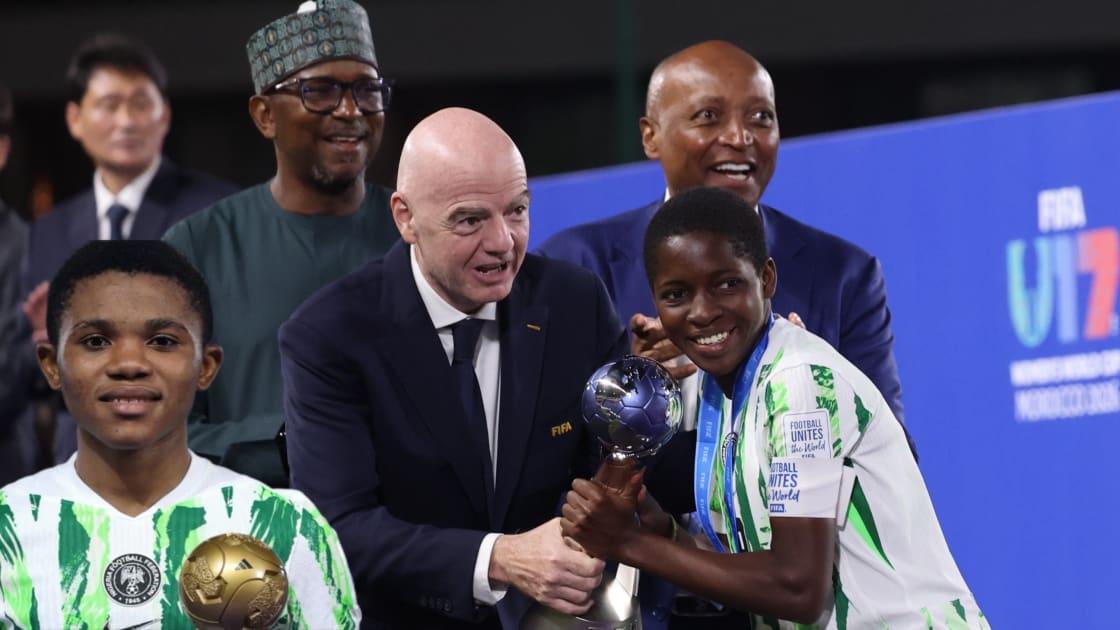
Nigeria’s Flamingos did more than lift the trophy at the FIFA U-17 Women’s World Cup Morocco 2026. They also finished among the tournament’s statistical leaders in several important categories. From individual work rate and shot volume to team-wide attacking and physical numbers, the data underlines the quality of their campaign.
Here are the standout rankings.
Most Fouled Players
Nigeria’s attackers were a constant threat, and opponents had little choice but to foul them.
Queen Joseph (Nigeria) – 13
Mary Dunstan (Nigeria) – 11
Diana Bravo (Venezuela) – 11
Ri Ui Gyong (DPR Korea) – 11
Ri Kyong Im (DPR Korea) – 11
Queen Joseph topped the entire tournament in this category, with Mary Dunstan right behind her. Oluebube Umejiaku also finished joint-6th with 10.
Attempts at Goal (Players)
Mary Dunstan’s relentless shooting placed her among the tournament’s most active attackers.
Yu Jong Hyang (DPR Korea) – 51
Ri Ui Gyong (DPR Korea) – 37
Kim Won Sim (DPR Korea) – 27
Mercedes Diz (Argentina) – 24
Mary Dunstan (Nigeria) – 24
Total Distance Covered (Players)
Work rate was a hallmark of Nigeria’s campaign. Queen Joseph ranked fourth overall in distance covered.
Eh Chong Gum (DPR Korea) – 61,918m
Pepe (Brazil) – 61,169m
Isa Rech (Brazil) – 60,508m
Queen Joseph (Nigeria) – 59,655m
Ri Kyong Im (DPR Korea) – 59,421m
Crosses
Nigerian players were among the most active crossers in the tournament.
Eh Chong Gum (DPR Korea) – 51
Ri Ui Gyong (DPR Korea) – 43
Kanyinsola Yusuf (Nigeria) – 43
Queen Joseph (Nigeria) – 31
Amari Manning (USA) – 28
Attempts Outside the Penalty Area
Ri Kyong Im (DPR Korea) – 14
Lindey Atieno (Kenya) – 13
Kanyinsola Yusuf (Nigeria) – 11
Tosin Rafiu (Nigeria) – 10
Seidatu Wahab (Ghana) – 10
Harura Matsushita (Japan) – 10
Headed Attempts at Goal
Yu Jong Hyang (DPR Korea) – 13
Pak Kyong Ryong (DPR Korea) – 6
Mercedes Diz (Argentina) – 5
Catalina Munoz (Chile) – 4
Oluebube Umejiaku (Nigeria) – 4
Corners
Eh Chong Gum (DPR Korea) – 57
Kanyinsola Yusuf (Nigeria) – 27
Helena (Brazil) – 24
Carolina Ferrera (Spain) – 14
Rara Higuchi (Japan) – 14
Defensive Pressures Applied
Lindey Atieno (Kenya) – 177
Queen Joseph (Nigeria) – 173
Gaudancia Maloba (Kenya) – 170
Kennedy Corkin (Samoa) – 168
Mary Dunstan (Nigeria) – 161
Receptions In Behind
Oluwakemi Adegbuyi (Nigeria) – 26
Maddie Dimaria (USA) – 20
Yu Jong Hyang (DPR Korea) – 20
Ri Ui Gyong (DPR Korea) – 20
Mei Hanashiro (Japan) – 19
Receptions Under Pressure
Queen Joseph (Nigeria) – 196
Yu Jong Hyang (DPR Korea) – 186
Ri Kyong Im (DPR Korea) – 186
Fuki Ito (Japan) – 185
Oluwakemi Adegbuyi (Nigeria) – 174
Goalkeeper Actions Inside the Penalty Area
Susahna Peacock (Samoa) – 220
Nathy (Brazil) – 197
Jane Ijirigho (Nigeria) – 165
Nienke Holland (New Zealand) – 157
Belinda Maku Aklie (Ghana) – 141
Team Rankings: Nigeria in the Top 5
Attempts at Goal
DPR Korea – 218
Nigeria – 130
Japan – 110
USA – 107
China PR – 99
Expected Goals (xG)
DPR Korea – 17.84
USA – 17.82
Brazil – 10.45
Nigeria – 10.2
China PR – 9.45
Goals Scored
DPR Korea – 29
USA – 27
Brazil – 18
Japan – 15
Nigeria – 14 (tied with China PR)
Fouls Committed
Nigeria – 79
DPR Korea – 77
Venezuela – 68
Japan – 68
Brazil – 65
Total Distance Covered
Brazil – 10,517
Japan – 10,453
DPR Korea – 10,230
USA – 9,141
Nigeria – 8,622
Individual Honour
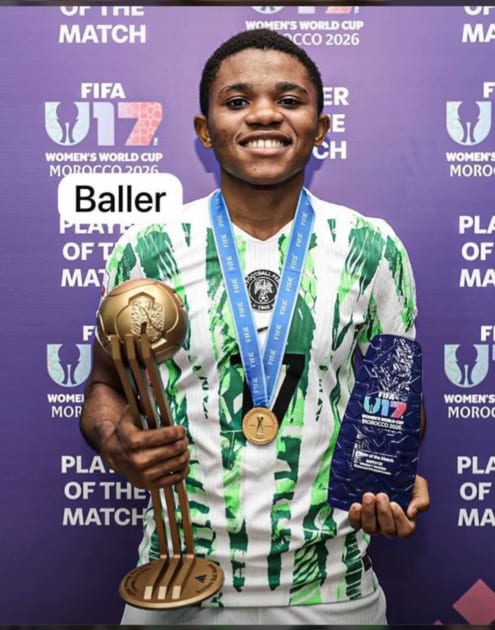
Oluebube Umejiaku, who scored the winning goal in the final, was named the tournament’s adidas Golden Ball winner — recognition of her decisive influence throughout the competition.
The Flamingos’ victory was not just about one match. It was built on high work rate, physical intensity, and consistent attacking threat. From Queen Joseph’s leading role in drawing fouls, covering ground, and applying pressure, to Mary Dunstan’s shot volume, Kanyinsola Yusuf’s crossing and set-piece involvement, Oluwakemi Adegbuyi’s runs in behind, and Jane Ijirigho’s goalkeeping activity, the numbers reflect a side that imposed itself across the tournament.
These key stats show why Nigeria were able to go all the way and become world champions.
Continue reading with Diamond
This story is for Gold and Diamond members. Join to keep reading, with every members-only story in full and an ad-light read.