
Video: Justin Madugu Responds to #MaduguOut After Nigeria’s World Cup Blow: “I Understand Your Pain”
Super Falcons coach Justin Madugu accepts responsibility for Nigeria’s failure to qualify for the 2027 FIFA Women’s World Cup and responds to growing calls for his resignation.

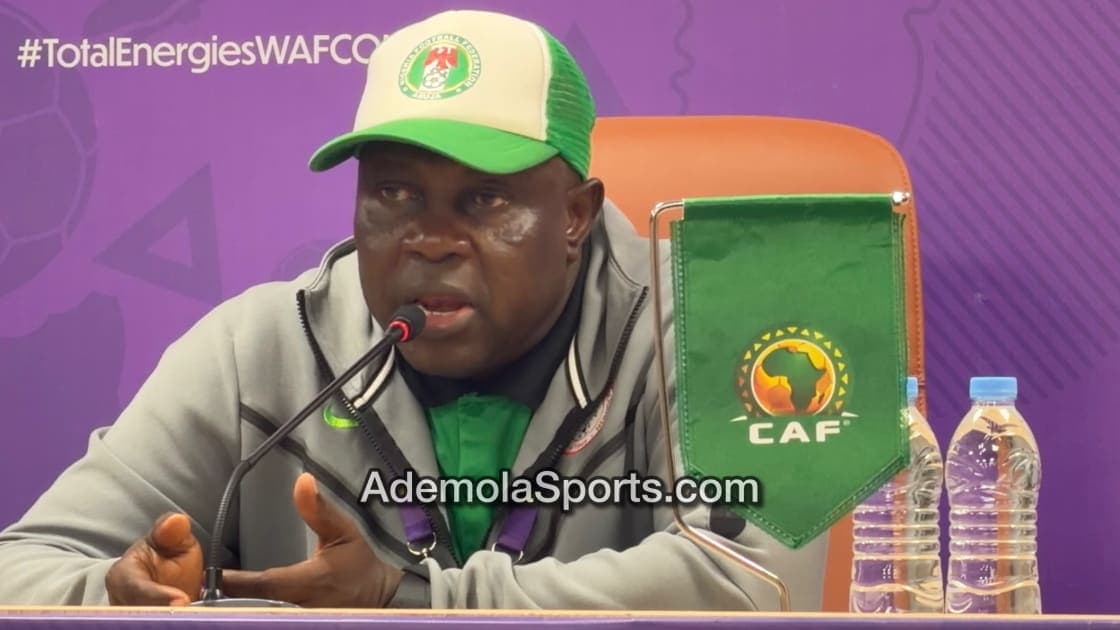
Super Falcons head coach Justin Madugu has acknowledged the growing criticism of his position following Nigeria’s failure to qualify for the 2027 FIFA Women’s World Cup, saying he understands the disappointment and pain of supporters.
Madugu addressed the criticism after Nigeria’s 2–1 defeat to South Africa, which ended the Super Falcons’ hopes of qualifying for the World Cup through the tournament’s route.
“I understand the pain everybody is going through,” Madugu said when asked about calls for his resignation on social media. He added that Nigerians had “a lot of hopes and high expectations from the team” and that the result had not gone as expected.
The coach said criticism was part of the responsibility that comes with managing the national team and accepted that his future was ultimately not his decision.
“As a coach, you must always live with the consequences of whatever it is that comes your way,” he said.
Madugu also pointed to his record since taking charge, saying he had overseen almost 28 matches, with 19 wins, four defeats and four draws. However, he acknowledged that the latest defeat came at a particularly important moment.
“I have to understand the way Nigerians... judge you as a coach based on your last result,” he said.
Madugu accepts responsibility for World Cup failure
At the start of his post-match press conference, Madugu apologised directly to Nigerians for the failure to qualify.
“We came, did the best that we could, but our best was not good enough,” he said, adding that the coaching staff and players took “full responsibility” for what happened.
He identified poor decision-making, missed chances and defensive mistakes as key factors in the defeat.
According to Madugu, Nigeria had the game under control for periods but lost concentration and made unnecessary decisions that allowed South Africa to punish them. He described the repeated defensive lapses as a major concern.
“It’s more of individual error, individual error, individual error and then we put ourselves in trouble,” he said.
‘We were not clinical’
Nigeria created opportunities but failed to convert them, while South Africa were more efficient with the chances they had.
Madugu admitted that the Super Falcons had a goalscoring problem during the tournament because of their lack of efficiency in front of goal.
“We have not been clinical. We create several chances but we are very wasteful with the opportunities that always come our way,” he said.
He argued that Nigeria could have taken control of the match much earlier if the chances created had been converted.
“This was a game we would have finished since first half based on the opportunities that we had but we couldn’t utilize them,” Madugu said.
The coach also admitted that set pieces, previously identified as one of Nigeria’s strengths, did not produce the desired results during the tournament despite the team continuing to work on them in training.
Madugu explains selection and left-back decision
The coach was also questioned about Nigeria’s use of players in unfamiliar positions, particularly Michelle Alozie at left-back, while natural left-back Glory Ogbonna did not feature.
Madugu defended the decision, explaining that player selection was based on training performances, readiness and the assessment of the opposition.
He also said Nigeria currently lacked strong options at left-back at this level, noting that one alternative was injured while another had not met expectations during the competition.
Madugu maintained that Alozie had performed well in the position, including receiving a Player of the Match award during the tournament, and argued that the decisive issue against South Africa was ultimately decision-making rather than simply the player's position.
Forced substitution of Deborah Abiodun
Madugu also explained the decision to substitute Deborah Abiodun, saying the midfielder had been playing through pain and had requested to come off.
He said Abiodun had actually asked to be substituted at half-time, but the technical team initially asked her to continue for another 10 to 15 minutes before eventually making the change.
According to Madugu, the decision was made to protect the player's health and long-term career rather than as a tactical choice to remove her from the game.
Madugu rejects link between social media criticism and performance
Madugu was also asked whether criticism of the players' off-field activities, including their use of TikTok and social media, had any connection with what was seen on the pitch.
He said there had been concerns earlier in the tournament, particularly after Nigeria's opening defeat to Malawi, and that the players were cautioned to remain focused.
However, he rejected the idea that a lack of professionalism off the pitch was the main explanation for the team's performance.
Madugu said the defeat to Malawi served as a wake-up call and that Nigeria subsequently improved, describing the quarter-final against Cameroon and the match against South Africa as stronger performances than some of the team's earlier group-stage displays.
What next for Madugu?
Madugu stopped short of addressing whether he expects to remain in charge of the Super Falcons, instead leaving the decision to the relevant authorities.
He said he would appreciate the opportunity he had been given to serve the country, but accepted that his record would ultimately be judged alongside the significance of Nigeria's failure to qualify.
“If our best is not good enough, it’s not for me to decide what happens,” he said.
For now, the future of Madugu and the direction of the Super Falcons remain questions for the Nigeria Football Federation. What is clear from his post-match comments is that the coach recognises the scale of the disappointment, accepts responsibility for the result and understands why sections of the Nigerian football public are demanding change.
Sign in to read the full story
This article is for members. Sign in or create a free account to keep reading.