
"Bridging the Gap: What Nigeria’s Heavy Defeat to France Reveals About the Challenges Facing African Women’s Basketball on the Global Stage"
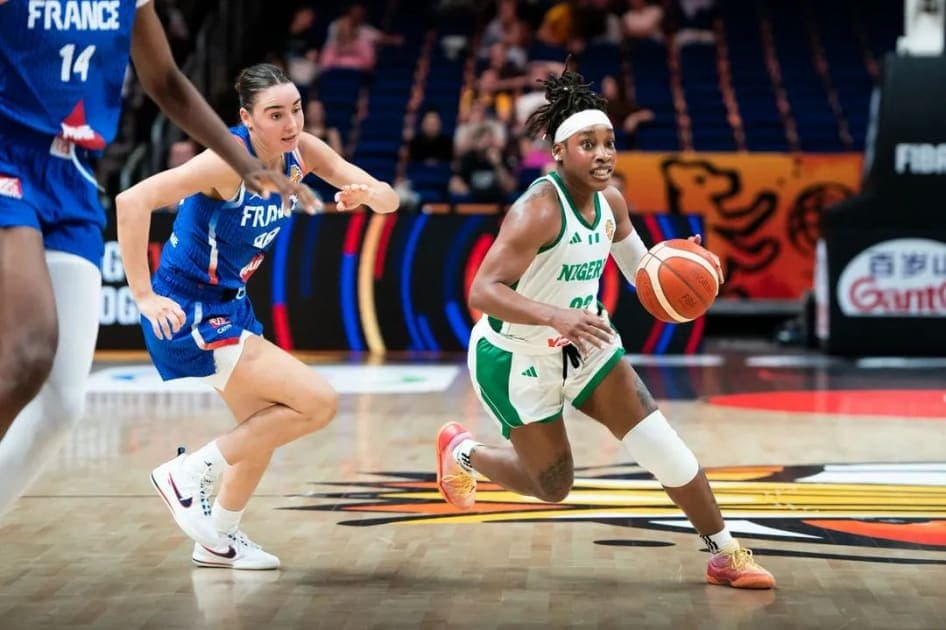
For Nigerian fans (and D’Tigress supporters), this one hurt.
France 111 – Nigeria 56 on 7 September 2026 in Berlin wasn’t just a loss — it was a heavy, one-sided defeat that closed out a winless group stage for the African champions at the 2026 FIBA Women’s World Cup. After earlier narrow-ish setbacks to South Korea and Hungary, this final Group B game felt like a full stop on a campaign that never really got going.
How it unfolded (from a Nigerian lens)
France came out flying and never looked back:
Q1: 13–31
Halftime: 26–65 (France’s official-match record first-half points)
After three quarters: 39–95
Final: 56–111
Nigeria scored exactly 13 points in each of the first three quarters. The defence was overwhelmed, the offence stalled, and the energy drained as the French kept raining threes.
The numbers that sting
France shot 58% from the field and an outrageous 55% from three (22 makes — a World Cup record). They dished out 29 assists to Nigeria’s 8 and forced 23 turnovers.
On the Nigerian side the bright spots were limited:
Grace Efosa-Aguebor led the team with 15 points and kept fighting.
Elizabeth Balogun added 11.
Rita Igbokwe grabbed 9 rebounds.
Captain Amy Okonkwo had the team-high 3 assists.
Gabby Williams (25 points, including 6 threes) and the French supporting cast simply had too much size, speed, skill and confidence.
What this means for D’Tigress
Nigeria arrived in Berlin as five-time consecutive African champions and a top-10 ranked side that had reached the Olympic quarter-finals in Paris 2024. Expectations were high. Going 0–3, and finishing with a 55-point hammering, is a tough reality check. The gap between dominating Africa and competing consistently against Europe’s elite is still very real — especially in shooting efficiency, ball security under pressure, and secondary creation.
The positives to hold onto:
Individual effort never completely disappeared (Efosa-Aguebor, Igbokwe, Balogun).
The core of this team is still relatively young and experienced at the highest level.
Continental dominance remains intact; the Afrobasket pedigree is not in question.
But the World Cup exposed clear areas that need urgent work before the next major window: decision-making against elite defences, three-point shooting consistency, and reducing turnovers that fuel transition scores.
France used the game as a confidence booster heading into the quarter-finals. For Nigeria, it ends a disappointing tournament. The pride of the D’Tigress is still there — the challenge now is turning that pride into better results against the world’s best the next time they meet.
Sign in to read the full story
This article is for members. Sign in or create a free account to keep reading.